Showing posts with label Slow Food. Show all posts

03 November 2009

Eating With Relish


Every sweet has its sour; every evil its good.
Ralph Waldo Emerson


I hated school. At my right wing, white, Anglo Saxon, protestant school I found that there wasn't a lot to look forward to. One of the reasons was because I was the 'noticably ethnic' - being Eurasian.


I arrived two thirds of the way through the course of primary school with an English accent and barely a clue about Australia, even though I was born here. But I may as well have come from the other side of the galaxy. It was the seventies and Australia felt small minded and isolated compared to London, at least to a small, precocious and well traveled child, used to the company of adults, not other children.


I was a square peg who didn't fit the prerequisite hole - in any shape or form - and the daughters of the prominent politicians and matriarchal social mavens of philanthropy, eyed me with suspicion. In particular, my lunches were deemed "too bizarre" to them: cha sui sandwiches one day, chicken liver pâté with lettuce the next, and Liptauer on rye bread when I was living with my Hungarian foster family. It was odd that opinions could be so quickly formed based on the examination of the contents of one's lunch box. No cordial, no white bread with Vegemite, no Twisties and no lunch orders from the tuckshop - no good.


At lunch time I was relegated to the corner of the courtyard outside my classroom with the girl whose mum gave her hard boiled eggs. Although I did not enjoy the odour of the eggs, they were exquisitely wrapped in rainbow coloured wax paper and came packed with miniature salt and pepper shakers. Her Mum kept venison in the freezer and I had eaten some of it with their family. That was the first foodie secret we shared: weird food tastes good. Years later I heard that her Mum had spitefully been tricked into eating Snappy Tom 'Seafood in Aspic' cat food by one of the other mums, who found her more refined taste in food "just too eccentric".


Three times a year at school we had a mid term holiday. Half term was actually a half day. This was the one thing about school I looked forward to. If my mum was well enough she would swing by school in the yellow sports car and collect me. We would ride home in the low slung beast, singing along to the radio.


On the way home, we would make a stop at a Milk Bar. I quietly watched as she paced a lap of the small general store, then went to the pie warmer to get me a pastie. Back in the car, I would cradle the pastry in my lap, its warmth spreading through the white paper bag onto my thighs. The curious smell of parsnip, turnip and carrot wafted into the dark, leathery interior of the car.


At home in the kitchen, the pastie felt heavy in my hands. Carefully removing the treat from its bag, I would pick at the twisted seam of pastry that bound the parcel of mixed vegetable and minced meat. But as much as I loved eating the pastry, it was the accompanying tomato relish that I really longed for.


The relish was made by my nasty, bulimic, Nana. She bottled it in skinny old Nescafe jars with yellow plastic lids. It was dark brown, chunky, and contained both tomatoes and sultanas, heavily spiced and sweet. I loved it. The smell made me purr. I could have eaten it on everything, but for some peculiar reason, it was reserved only for pastie eating. Mum however also got to eat it with cheese and crackers. Starved of decent meals by my mean spirited, image obsessed Nana, Grandpa lived on the stuff.


The last time I tried to make relish, I had a mediocre result. I unsuccessfully tried to recreate Nana's and I blogged the result. Silly to try to cook up something when you have a cold and have lost your palate really. This time I turned to Mr Sticki's Nana's recipe - he figures it must be at least one hundred years old - and it worked a treat. Hailing from Shepparton she was apparently the antithesis of my Wimmera raised Nana and Mr S has warm memories of her.


This recipe was transmitted down the phone line from Mr Sticki's Mum, Bunny, and transcribed by my beloved. I have written it here for you verbatim. It's so simple.


Following the recipe, I chose to drain the tomatoes overnight in a muslin bag suspended over a mixing bowl. Instead of discarding the juices, I made absolutely the best tomato soup with them. It was pretty much the same as Shannon Bennett's tomato consomme, a fresh, light and pretty, ideal for an entree or amuse bouche.


I did find myself adding more sugar to the relish than specified, as the requisite 'covering the tomato mix with vinegar', did make it face wrinkling in its sourness. My choice was a combination of Demerara and low GI sugar - for health and flavour - plus cooking the mix for longer than the recipe specified, which darkened the finish. Use white sugar if you want it to stay bright red and in that case ensure you stick to the specified cooking time. Other changes I made were to add less flour and a bit more curry powder.


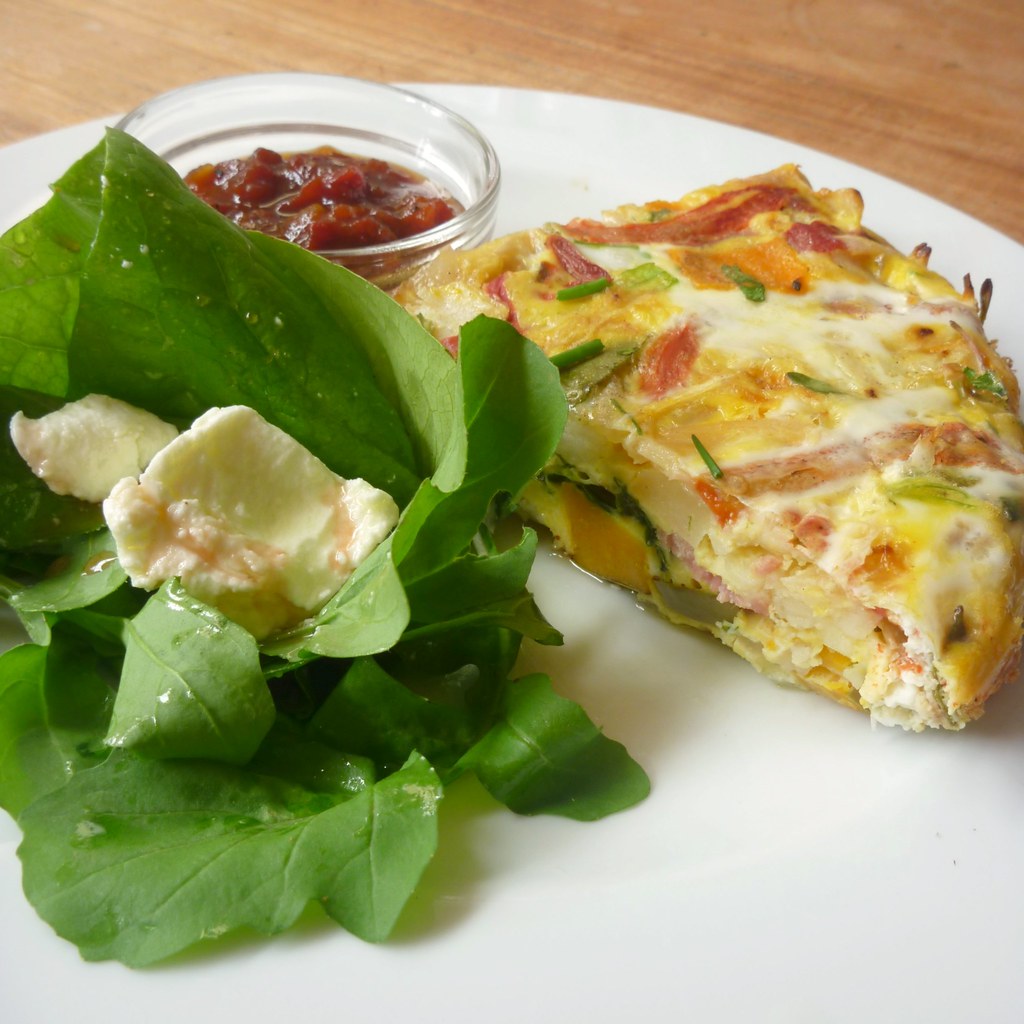
And the result? Although Bunny's mother's relish doesn't have as much spice as my Nana's and lacked sultanas, I would happily slather it on anything. I haven't had it with a pastie yet, but it stood impressively alongside my frittata (pictured) made with freshly laid eggs, Boks bacon, home grown herbs and vegetables. And tomorrow it will travel to work in my lunch box, which my colleagues will examine as usual with enthusiasm and excitement. How times have changed!


Nana Burgess's Tomato Relish

6lbs Tomatoes
2lbs Onions
1 1/2 lbs Sugar
1 1/2 tbs Curry powder
2tbs Mustard
4tbs Flour


Cut up onions and tomatoes, sprinkle with a handful of salt. Stand them overnight.

In the morning drain the tomatoes and onions and place them in a pot. Cover the mix with vinegar. Boil for five minutes.

Add the other ingredients mixed with a little vinegar. Boil for one hour. Bottle in sterilised jars.


14 February 2009

Slow Food Trivia Night, Mon 16 February


Back by popular demand is the Slow Food Melbourne Gastronomic Trivia Night with MC Amanda Finnis.

Gastronomica is a quiz with a difference. Form a team and pit your wits against your Gastronomica host. How's your knowledge of Australian wine regions? What do you know about the beers of Europe? Do you know your Stilton from your Brie? Your loin from your chump chops? Your béchamel from your bearnaise? How good are your tasting skills - can you identify separate ingredients from one taste of a dish?


Come along and have a go at overthrowing Table Matteo, the reigning gastro-champs (or is that chumps?). Great fun and fantastic prizes - as usual!


Quiz begins at 8pm
Collins Quarter
, 86a Collins Street
(between Exhibition and Russell street)
See the Collins Quarter website for location details.


Gastronomica is a quiz night like no other involving:

  • Appetiser - a special written question
  • Entrée - 10 general questions
  • Main Course - 10 multiple choice questions
  • Palate Cleansers - take on the MC, one-on-one, for a chance of a prize
  • Dessert - 10 questions on a specialist topic

For each Gastronomica quiz night there will be interactive questions involving a taste or smell ... and a variety of spot quizzes for instant prizes.


The unique quiz that is Gastronomica also features:

The Wheel of Cheese

The Wheel of Cheese is a truly marvellous construction. This specially designed wheel is used to decide the degree of difficulty of certain "spot quizzes" that occur during the night. Will the question be soft, medium or hard?

The Mystery Box

A mystery consumable item is placed inside a box. A clue as to the contents is placed on the top. To guess the contents a gold coin donation is required. At the end of the night the first correct entry to be drawn from a hat wins the box and its contents. All proceeds from The Mystery Box go to a charity of the organiser's choice.

The Instant Review

Teams get the chance to try a wine, spirit, beer, food ... and then write a 25-word review. The review deemed the best by your Gastronomica host, wins a prize.

Collins Quarter would like to invite you to Ra (upstairs) for Champagne and cigars after the trivia or come early for a bite to eat first.


I have seven people in my team and would welcome others...

...Let me know if you'd like to come.


21 August 2008

Cheeses Geist! Please submit for the sake of our Cheesemakers...

Roquefort Carles from Will Studd's Cheese Slices
Photograph & Copyright by my talented friend Adrian Lander


Traditional consumption of raw milk


Domesticated animals were first used for milk eight to ten thousand years ago, as a genetic change effecting mostly people in Europe, the Middle East, and parts of Africa enabled them to digest milk as adults. Milk from domesticated animals then began to become important as a human food. With domestication and settlement, fewer wild animals were available; as groups of people roamed less, they hunted less, eating more grains and vegetables. In some cultures, milk replaced animal bones as the chief source of calcium and some other minerals.


In indigenous cultures where adults used milk, often it was used as cultured or clabbered milk. This is similar to homemade raw yogurt, and it is partially predigested-much of the lactose (milk sugar) has been broken down by bacterial action. This process must be accomplished over a period of several hours in the stomach when one drinks fresh milk; yogurt or clabbered milk is much more easily digested than fresh milk.


Adaptations in evolution are always the effects of particular causes. Humans developing the ability to digest milk into adulthood possessed a survival advantage; such change is the basis of evolution. Put simply, many human beings evolved the ability to easily digest raw milk because raw milk from healthy, grass-fed animals gave them an adaptive advantage; it made them stronger and more able to reproduce. Such milk remains a wonderful food that provides us with fat-soluble nutrients, calcium, and other minerals that are by and large in short supply in the modern diet.

NOURISHED MAGAZINE


It isn't legal to sell raw milk for consumption in Australia. It is legal to sell it for cosmetic purposes such as for taking a milk bath. It is not legal to make cheese from it, and yet some of the world's most sought after and oldest traditional artisanal cheese are made with raw milk.


The milk we drink and use in cheesemaking in Australia is required to be heat treated in order to kill certain bacteria. Many of the foodstuffs we eat today that are produced in commercial quantities have been heat treated and processed with chemicals. There is now a growing awareness that these foodstuffs are part of the cause of the growing numbers of allergies in our children today. In fact most people who are lactose intolerant can drink raw milk and eat raw milk cheeses with no ill effects.


Why? Because the human body evolved to have various gastrointrestinal bacteria in our gut to process and digest the food we eat. In turn our bodies have acquired the ability to draw nutrients and produce disease preventing antibodies from certain food. Modern society however has taken a path whereby it polices food and tells us that we can only eat food prepared in certain ways for the benefits of our health.


However in the case of raw milk, a number of credible scientific research projects have proved that it has a beneficial effect on the body and can reduce allergies in children. Those beneficial bacteria are removed when the milk is pasteurised.


Have you noticed that our dairy corporations now offer enriched milk? They now use oil as a carrier in milk, to try to restore the nutrients killed off in pasteurisation. But added synthetic nutrients are not easily absorbed by the body. Have you seen lactobacillus, acidophilus products in stores? These are some of the healthy bacteria in raw milk, but we are now encouraged to consume them in pill form, where once they were innate in our diets and raw milk products such as yoghurts and soft cheeses.


Once you understand these things it looks like a case of the tail wagging the dog. Why would anyone in their right mind choose synthetic over natural?


Food Standards Australia and New Zealand (FSANZ) have finally announced a review of domestic dairy processing standards that currently ban the production and sale of raw milk and the cheeses made with it.


Will Studd, whom some of you may have seen on the TV series Cheese Slices or from his excellent Cheese books, is founding director of Fromagent Australia and Calendar Cheese Company who import and distribute many of the wonderful Cheeses that come to table in Australia. He has been leading the battle tirelessly to change the code in relation to raw milk cheeses for twelve years. That's a hell of a lot of lobbying.


This opportunity to effect change may not come again for another ten years so it is vital that anyone who would like to liberate Australian Cheesemakers make a submission to FSANZ. That's you, as an individual, even if you have nothing to do with the food industry, even if you (heaven forbid) don't eat cheese. It's about the right of the consumer to choose what they consume and the support of traditional practices such as the production of raw milk cheeses and other products to ensure that they don't die out. Please, please, please?


Should you wish to read FSANZ discussion paper it is available to download from Will's website - here.


To make your submission I have received the following template (see below) from Will Studd via Kelly Donati of Slow Food Victoria that you can copy and paste and email. Slow Food Victoria will make their own submission. The deadline for public submissions is September 17, 2008.


Send to: Submissions@foodstandards.gov.au


Re: Proposal P1007 Primary Production & Processing Requirements for Raw Milk Products (Australia only)

I would like to register my support for an amendment to the code to bring Australia into line with other major international cheese manufacturing countries. My objections to the current standards that prohibit the production and sale of most cheese made from raw milk in Australia are as follows:

1. The purpose of the Standard is to guarantee safe cheese – however the assumption that pasteurisation as a single step will guarantee safety is not scientifically valid.

2. The single critical control point that guarantees safety for all cheese varieties is starter culture activity that creates a hostile environment to pathogens in the cheese. Starter culture activity comprises two biological components, the first is primary fermentation of milk sugar to organic acids during cheese making and the second is secondary fermentation/metabolism of organic acids, fat and protein during ripening. This principal is supported by scientific studies and accepted by all of the major cheese producing countries of the world i.e. European Union (EU), USA, and Canada.

3. The standard is anti-competitive and trade restrictive. The standard does not encourage world best practice in cheese/milk production and allows the use of milk of poor microbiological quality for cheese making.

4. The microbiological standards for cheese are overly onerous in relation to E.coli and have led to very questionable practices in domestic production. The standard is out of step with scientific studies and the microbiological standards applied in overseas countries.

5. The standard is a breach of Australia’s commitment to WTO Policy, as it cannot be justified on scientific grounds for food safety. WTO Article 5.1 requires members to 'ensure that their sanitary or phytosanitary measures are based on an assessment, as appropriate to the circumstance, of the risks to human, animal or plant life or health, taking into account risk assessment techniques developed by the relevant international organizations'. Article 5.2 states in the assessment of risks 'Members shall take into account available scientific evidence'. Article 5.4 states 'Members should, when determining the appropriate level of sanitary or phytosanitary protection, take into account the objective of minimizing trade effects'.

6. The Standard is overly prescriptive. It does not meet the Council of Australian Government (COAG) guidelines on primary production and processing standards that stipulate an objective of minimal effective regulation.

7. The standard is highly discriminatory. It provides for international exemptions such as Roquefort and Swiss cheese but denies Australian cheese makers a choice of making similar cheese from raw milk. Australian artisanal cheese makers deserve to have the opportunity to develop a significant point of difference to enable their products to survive in a competitive market.

8. Over the past two decades international artisan and farmhouse cheese production has enjoyed a significant growth in demand due to a revolution in consumer interest. Many of these cheeses are made from raw milk and are recognised as having an infinitely superior flavour and regional character when compared to similar cheeses made from pasteurised milk. However unlike their overseas counterparts Australian consumers have been denied a choice of cheeses made from raw milk.

9. There is no reason why cheese made from raw milk should represent a greater degree of risk than those produced from pasteurised milk provided recognised international guidelines are adopted in Australia.

Signed (Your name)

Address (Your address)


01 August 2008

Taking Stock Chinese Style


To possess the services of a good Chinese Chef in one's home is like having a prima donna in close vicinity. He includes all the talents of a connoisseur with the knowledge of a herb doctor, the sensitivity of a mother-in-law, and the benevolence of a clucking hen.

He once held the title of Dai Si Mo which means "Grand Charge of Cuisine Affairs" and through the ages his title has grown in dignity and expanded to Dai Si Fu which identifies him as the "Grand Maestro of the Culinary Arts". Being a Dai Si Fu, he must be handled with the diplomacy and gentleness learned through time and experience.

No Dai Si Fu will remain in your home unless he loves you: and lucky and envied are those blessed with his solicitous attentions over the satisfaction of the stomach and health through the delicacies of his works of art and the science of leung-hay and yeet-hay (cool and hot chi force).

DOREEN YEN HUNG FENG
The Joy of Chinese Cooking, 1952


Ah Lung was a little girl when my family purchased her. It was the tradition for poor Chinese families with no money for a dowry to sell their daughters into service for life. In return for a new life in the household of a wealthy family, they worked as servants until they were old and many who never married were cared for by their employers until they died. Ah Lung died of cancer in the care of my grandparents in the nineteen seventies.


Little girls often started in the kitchens of the great Chinese houses and moved on to other tasks such as being maids as they grew. Ah Lung had been in the service of our extended family when my father was born and was chosen to be his nanny.


Becoming the nanny of a 'number one son' would have raised her standing in the hierachy of the household retinue and was a commendation of her skill. At that time she was probably around the same age as my grandmother, who had come to Hong Kong from Vietnam to find a husband. While my grandmother revelled in her new found life as a married woman in a sophisticated and modern family of influence, in a cosmopolitan city of the nineteen thirties, Ah Lung spoilt my father rotten.


My father is a stubbornly obstreperous character at times, and like a little Emperor he took advantage of her nurturing and kind heart. While my aunts and uncle dined together at the nursery table, his majesty was allowed to sit in his red pedal car and was fed mouthfuls of his favourite dishes.


My uncle - his younger brother - also had a personal nanny and their sisters shared another. I don't know anything of the other servants, but when my father's generation had left home and my grandparents downsized to just the one home on Hong Kong Island, Ah Lung became their housekeeper and Dai Si Fu chef.


By the time I arrived in the family Ah Lung had a gold tooth, a gappy smile and was deaf. In fact Ah Lung - pronounced ah-loong - 'deaf one' was her nickname, but she was strong and wiry and as wrinkled as a steamed tofu skin roll.


Dressed in the traditional clothes of an Amah she wore a three quarter sleeved, fitted, starched white mandarin collared top, that sat wide, stiff and loose over her hips and wide black pants. Her greying hair was cut short to the neck and pulled back tightly from her face with a wiry alice band.


At three months old I was taken to Hong Kong for my Mun Yuet. This is the time when the birth of Chinese babies are celebrated and named. I believe the tradition began at the third month because infant mortality had always been very high in China, with many babies 'taken away by bad spirits' in the first months of their lives. Prior to the Mun Yuet party, babies were given pet animal names to confuse the spirits and many wore little hats with small pointed ears sewn on them to disguise the child as a small animal.


When my parents decided to stay in Hong Kong and not to return to Australia, Ah Lung and my grandmother became very much involved in my upbringing. In fact such was their influence, I didn't learn to speak English until several years later, when we moved to England. Respectfully in Cantonese, I called my carers Ma Ma and Lung Por. I loved and revered them both.


In spite of my mother arriving in Hong Kong unable to speak Cantonese, Ah Lung and Ma Ma patiently taught her a great deal about Chinese cooking and by default, me also in later years, as I watched my mother recreating their dishes in our kitchen and later, when giving Chinese cooking lessons in shopping malls and in our home.


Mum had a lot to learn, because with the exception of roasted meats and wind dried specialties, everything was made from scratch in the family kitchen with fresh food purchased in the wet markets every day.


As if by osmosis the notion of a healthy balance of elements, textures and herbs in cooking was taken in by us and because it is now second nature to me, I am often startled when these principles are not addressed by others in their Asian cooking. I earnestly try to live up to the legacy of their mastery and subconsciously even apply Confucian notions to western cookery. But memory is such a strong thing that I feel certain I fall short of their skills.


Today, in a time where households no longer have chefs and household servants, convenience is the driving force contributing to unnecessarily poor diets in the developed world, creating an obese population with all the medical complications that come along with it.


The same findings of poor nutrition and obesity resulting from a dependence on convenience foods have also begun to come out of China. In a country that has traditionally placed so much stock in the benefits of balanced eating with reference to herbal enhancement for well being - along with exercise through martial arts - western style convenience and apathy towards home cooking is emerging as a negative trend that is sadly mirroring the current malaise in the west.


While the Chinese turn their backs on centuries of tradition, in the west a few of us are looking back to restore the nurturing balance of days gone by and in one form this manifests as the Slow Food Movement.


Although there are people in the developed world who do not know a time when shopping was not done in the Supermarket - a time before packaged and processed convenience food became the norm - a number of us are taking stock of our habits and are questioning the notion of convenience, especially when it comes to the health of our families. What is the actual cost of packaged convenience in our lives? It saves us time and effort but is expensive per gram, not particularly delicious and loaded with synthetic additives that can impact negatively on the health of children. So in the long run is it really worthwhile to cut corners?


I - like many who claim that we are nuts about cooking and are agog about things gourmet - unconsciously used to reach for the convenience of a stock cube or vacuum pack of stock or veal jus. Although it is by no means one of the worst of convenience foods available, it is actually quite an insipid addition to meals.


While home made stock is the most simple and cheap of necessary items to have in the pantry, I used to put it in the 'too hard basket' and curiously turned a blind eye to the chemicals, stabilisers, flavours and colors in packaged stock that I would eschew in items such as packaged dressings and sauces. But I now realise that stock is the life blood of cooking; a fundamental.


If your dishes are to reach the dizzy heights of flavour, you have to be using a good stock. Once I turned the corner I found that this is what lifts home cooked meals above the fare cooked in some venues and I can picture Ah Lung laughing at me and calling me a silly girl, nodding knowingly with her wide gappy smile.


If you are passionate about cooking but not currently making your own stock or Bouillon - whether European or Asian - you are possibly, as the Chinese proverb says, "Riding a cow, looking for a horse". You're making do until you can afford - or can understand - better. Once you turn the corner, you just don't go back. And to be honest, I smacked myself in the forehead when I realised how cheap and easy it is to make. It is also convenient to have on hand and not difficult to store when you know how.


The Chinese Culinary Arts have recipes for a number of stocks. At their very basic, Chinese stocks are considered to be the life blood of good health, carrying the medicinal benefits of the same herbs and spices that ancient herbal medicines use as a base to eradicate toxins and to correct the balance of the life force.


The term 'Masterstock' is something that is now fashionably bandied about in the west, particularly in the Australian restaurant scene, but is not really understood in its correct form. Simply it is a basic meat based clear soup in which different meats have been poached. Then the solution is strained, boiled, added to and used over and over again.


Each time it is used to poach more meat, the flavour increases in pungency and it imparts a deep flavour to anything poached in it. In a restaurant the stock would be used every day for poaching and added to sauces. In a household this happens less often. There are two forms of traditional Masterstock. One is merely darker than the other, employing dark soy in the mix to create specifically richer dishes such as Red Braised recipes.


The use of Chinese Masterstock evolved from a technique known in Cantonese as 'Dunn'. This is steaming and double boiling. The meat involved is browned, then submerged with vegetables in a pot of stock, which itself is then placed into a shallow bath of boiling water and the lot is covered, producing steam. After some time, the ingredients are then removed and sometimes a little of the stock is thickened with cornstarch and served with the ingredients. The rest of the stock is then reserved for use on another occasion.


The older the stock - having been used multiple times - the tastier the result. For Malaysian buffs looking for the best Hai Nan Chicken Rice, you'll find that the best ones have always been poached in an old Masterstock - which you drink slightly diluted as a side dish. To round out the meal it is mixed with dark soy sauce and chilli for dipping and is used to cook the rice that is served with the chicken. Similarly it is used for Chinese Baak Jaam Gai (poached chicken), Yow Gai (Golden Oil Chicken) and See Yow Gai (Soy Sauce chicken).


Some people pass some of their stock down through the generations and a top Chinese restaurant will have a stock that predates the venue - which would have accompanied their first Dai Si Fu. My current batch is only approaching its third year, but if you taste a spoon of that and then a spoon of packaged stock, the difference is immediately evident. Masterstock is silky and rich. It has a sheen and a depth of texture as well as flavour. It makes all the difference to a sauce, a braise, a daube, a curry, a risotto or a paella and is fantastic simply served with fresh, fine egg noodles, torn lettuce and some won ton dumplings.


As with all things, the better the quality of your ingredients, the tastier the result. I choose to use free range, ethically raised local meat and locally sourced heritage vegetables because they taste significantly better and help to support other 'Aussie Battlers'. The intensity of the stock develops faster with these ingredients. I get the spices whole from my local Asian Grocer and suspend them in a muslin bag which can be bought there too. You can even buy the complete spice mix at some Asian Grocers.


My home made stock is cheap, dead easy to make and a wholesome convenience food. I keep it in sterilised glass jars with metal lids in the fridge and some of it becomes ice cubes that get tossed a couple at a time to season stir fries. At least one litre is kept frozen in reserve, to add to the next batch I make. If I poach meat in it I reserve that batch to use again too and it all goes into the pot when I make more of the basic stock.


The key to keeping your stock from going off is to keep the solution sterile. If you're not using it every day, once you have opened a jar of it you must boil the solution again before re-refridgerating, so as to rid it of micro-organisms. I just nuke mine in the microwave, replace the lid and allow it to cool and form a vacuum again before returning it to the fridge.


If you think you don't have time to make it, consider pulling it together before watching a DVD and let it simmer away while you relax. When the movie's finished, let it cool and then strain it. Heat again and bottle it. Simple stuff really.


Because I am a fuss-pot, I cook about a six litre batch over the course of a day. Usually after a saturday morning visit to the market, I start it in the pressure cooker and then remove the spice bag. Then I add the vegetables and simmer it down gradually, adding more water as it gets low, skimming along the way. Just before dinner, at the end of the process I remove the fresh herbs and vegies doing one last batch of water to simmer then switch it off and allow it to cool. After dinner I filter it twice through a Chux. But that's me. Mum does hers in a crockpot/slow cooker/electric congee maker from Hong Kong and leaves it alone.


Masterstock is not uniform in flavour, so my approach is adhoc now that I have an older potion. Depending on what is emerging as the dominant flavour over time I adjust the seasoning to taste. However if you want to start down this path, below the picture is the formal recipe that kick starts a Masterstock. Do you yourself a favour and revive a tradition.


Chinese Masterstock starter
In 3hrs it makes roughly 3 litres of stock


1.5kg Chicken carcasses (include necks and feet if you have them)
Optional - 650g pork spare ribs OR a 10cm square piece of pig or ham skin


For a vegetable version substitute the meat with:
500g bean sprouts
10 dried Shitake mushrooms


250ml Shaoxing Rice Wine
6 slices of ginger (if it's old, bruise it with the flat of a cleaver)
6 spring onions (scallions) tied in a knot, with the roots removed
2 large cloves garlic
100g rock sugar
3 tablespoon light soy sauce
4 or 5 litres of water
1 large carrot sliced in half vertically through the length
1 whole stick of celery
(Optional) a bunch of parsley stems (no leaves) tied with cooking twine


Placed in a muslin bag or a small cloth tied with string:
4 cardamon pods OR 2 large round brown cardamon
1 tspn fennel seeds
2 pieces of Cassia bark
2 star anise
1 piece of dried Mandarin peel
4 coriander roots
4 cloves
1 tsp Szechuan Peppercorns


Remove any excess fat from the meat and place in a stock pot with all the other ingredients. Bring to the boil and simmer for 20minutes before removing the spices, or do the same in a pressure cooker.


Cook over low heat for 2-3hours, occasionally skimming the surface - though you can leave this until the end. Taste the stock, if it is too weak reduce it further and then add back some water. Cool.


Line a colander/strainer with a fresh piece of Chux cloth or cheesecloth and place over a bowl to strain the solution. Repeat on returning it to the pot if there's still a lot of silt like residue sinking to the bottom.


Bring to the boil again and then bottle it or freeze in ice cube trays and then transfer the frozen stock cubes to a bag so you can grab a couple as you need them. Reserve some stock for the next time.


When you run low and need to make another batch, do exactly the same and add in the reserved stock. The Chinese ethic is to waste nothing, so the bones from the discarded carcasses feed my pets and some of the meat is made into rillettes or tossed into congee made with masterstock.


19 July 2008

Chanterelles? I nearly Blewitt


‘Are you content now?’ said the Caterpillar.

‘Well, I should like to be a little larger, sir, if you wouldn’t mind,’ said Alice: ‘three inches is such a wretched height to be.’

‘It is a very good height indeed!’ said the Caterpillar angrily, rearing itself upright as it spoke (it was exactly three inches high).

‘But I’m not used to it!’ pleaded poor Alice in a piteous tone. And she thought of herself, ‘I wish the creatures wouldn’t be so easily offended!’

‘You’ll get used to it in time,’ said the Caterpillar; and it put the hookah into its mouth and began smoking again.

This time Alice waited patiently until it chose to speak again. In a minute or two the Caterpillar took the hookah out of its mouth and yawned once or twice, and shook itself. Then it got down off the mushroom, and crawled away in the grass, merely remarking as it went, ‘One side will make you grow taller, and the other side will make you grow shorter.’

‘One side of what? The other side of what?’ thought Alice to herself.

‘Of the mushroom,’ said the Caterpillar, just as if she had asked it aloud; and in another moment it was out of sight.

LEWIS CARROL Alice in Wonderland


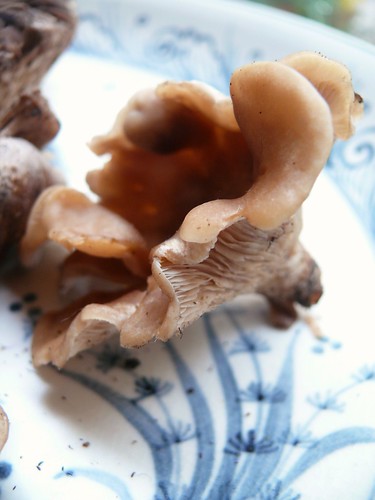
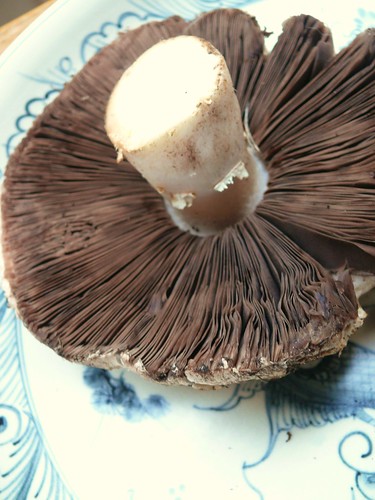
From Glenora Heritage Vegetables, Chanterelle's, Blewitt's and Cremini mushrooms


For more mushroom infatuation, visit Claire at
Melbourne Gastronome
and drool over her family's
mushroom ragu on wet polenta
.


14 July 2008

Comfort Food. The price of humility


I long to accomplish a great and noble task, but it is my chief duty to accomplish humble tasks as though they were great and noble. The world is moved along, not only by the mighty shoves of its heroes, but also by the aggregate of the tiny pushes of each honest worker. HELEN KELLER


Each day I thank the universe for the good fortune of living in a country where at my fingertips I am able to source the most wondrous fresh produce with origins from nations around the globe.


And when I pause for thought, I wonder why so many people turn their backs on this to trawl supermarkets for the sake of convenience, looking for products that will enhance the flavour of the lacklustre commercial produce that fills their trolleys...


...While others are willing to pay a chef $90 for the same simple meal that I have placed on my own dining table at a fraction of that cost.


My meal
- five serves total cost $22.


Roasted whole Milawa Free Range Chicken, hand raised in the Ovens Valley of Victoria, fed a diet of mixed grain, pasture and Spring water, chemical and hormone free, sustainable and Slow Food.


Under the skin and in the cavity:
usufruct Lemons from a neighbour, plus lemon thyme, Murray River Salt and Currawong Robust Extra Virgin Olive Oil. In the pan to deglaze - Gooramada Riesling from Rutherglen.


Pan juice gravy made with my own thirty month old Masterstock consisting of Milawa chicken carcasses, cassia bark, coriander pods, star anise, fennel seeds, spring onions, ginger, garlic, Fernleigh Farm celery, carrots and parsley stems.


One bunch of Nettles from Glenora Heritage Vegetables, Toobanac, Victoria, blanched and drizzled with Lemon infused Olive Oil from South Australia.
Mashed Royal Blue Potatoes from Gordon Jones, Warragul, Victoria.


Photo reproduced from Gourmet Traveller


For two
people at Bistro Guillaume
- cost $90:

Whole Barossa Valley chicken, purée de pommes and sauce à la chasseur (Chicken, mashed potato with a demi glace mushroom sauce, no vegetables)


In our household, when we choose to dine out we have two streams of thought:


Moderate to cheap and cheerful food, usually from another culture, consisting of good produce cooked with traditional or regional pride.


Secondly there is the more expensive food that astounds us with its imaginative and passionate approach. Food that requires a kitchen brigade, food I would not cook at home.


So with that in mind and having studied the menu, Mr Stickyfingers and I will not be going to Bistro Guillaume. I know a number of local bloggers have already been and shared their positive experiences, but as nice an outing as it might be to sit in the chi-chi surrounds of this much vaunted venue, quite frankly Monsieur Brahimi's menu resembles the food we eat at home. Well, those dishes along with our
favourite Asian and Hungarian meals in my repertoire.


Perhaps if I were unable to acquire such good produce for myself, I might consider it. Given the marvellous concepts, innovation and exploration of new produce happening on the food scene here in Melbourne, I think that it would not be high on our list. In fact there are a number of more humble French establishments that I might choose in preference to it.


I know that although my home is small and simply furnished, the providence of the produce in our pantry is as good - and my techniques are sound. Our roast chicken was as succulent and as flavourful as you could wish for, plus we had the benefit of easily staggering to the lounge for semi-horizontal post-prandial relaxation. There was minimal prep time. Cleaning up pretty much required just throwing everything into the dishwasher.


Perhaps I am stuck up and naive but nothing could compel me to part with $90 for the same meal that I eat regularly at home.


Are the diners of Melbourne suffering from a case of
'The Emperor's New Clothes' - being hoodwinked by our fascination for the new and by the hype stirred up
following the arrival of celebrated Sydney chefs?

What do you think?


22 June 2008

Tugging my cap


The earth is the earth
as a peasant sees it,
the world is the world as a duchess sees it,
and anyway a duchess would be nothing
if the earth was not there as the peasant sees it.

Gertrude Stein


There is a sharp chill
in the air that makes my nose feel brittle. I feel ice in the small of my back and my breath draws a kaleidoscope of steamy patterns before me. I picture my fluffy orange Australian alpaca blanket and look forward to its embrace as the darkness quickly creeps in to draw to the end, the shortest day. It is Yuletide in Australia.


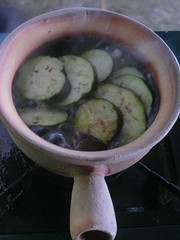
Though some habitually say that things get better from herein, I look deep into the tunnel that represents two more months of winter and uncover my repertoire of heart warming meals for my beloved - who still exercises outdoors in the frosty elements. In my tiny kitchen this is often a juggling act between rib sticking rich braises, rustic stodge and Asian chilli dishes. My pressure cooker is rarely in the cupboard and my claypot is unearthed.


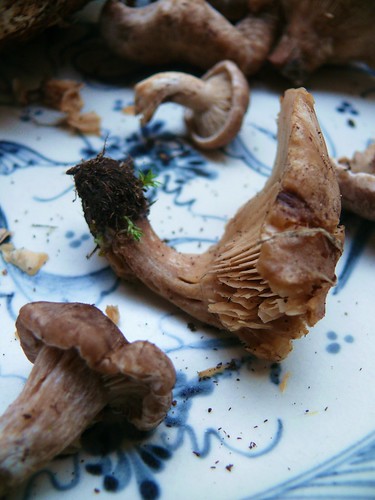
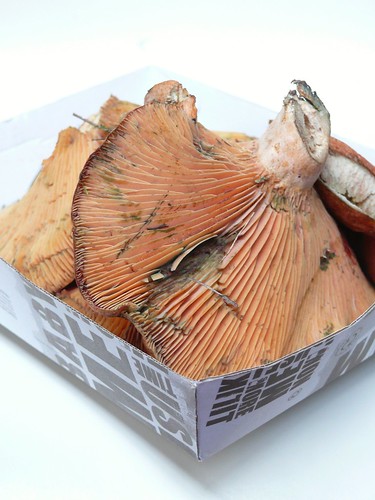
So in the midst of piling on more layers of clothes, I eagerly embrace the mushroom season. At the start of winter I look forward to the appearance in the markets of the Pine Forest Mushroom or Saffron Milk Cap, a type of fungi said to have been imported into Australia from Latvia. They grow as the name suggests under Pine trees and in season when driving around the country roads in the Daylesford area, I have spotted people jumping out of their cars to go and forage for them. And they're stunning, don't you think? I even find the green blemishes and bruises beautiful.


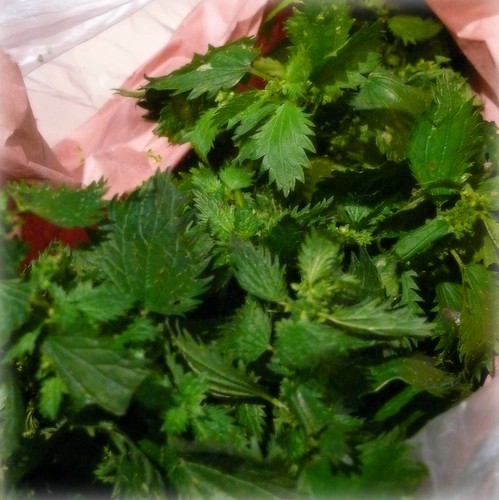
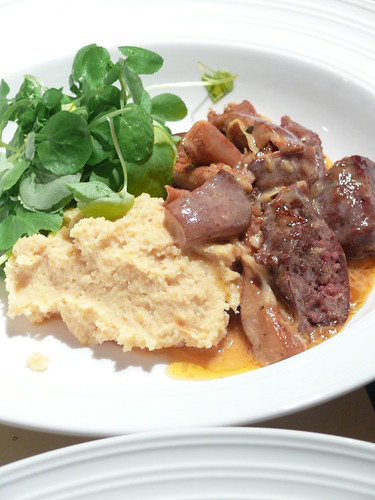
These ones pictured above will be devoured simply with some fresh herbs on creamy polenta. We usually partner them with blanched nettles, but this weekend I left my run a little late to get some. Instead there will be one of Winnie & Mal's Black Welsh beef Jack Horner sausages each and some watercress. My definition of Winter heaven.


Which dish personifies winter to you?


10 March 2008

Food For Trees

Restaurant luminaries unite
to fight climate change


Some of the biggest names in Melbourne’s restaurant business have joined forces to help reduce the environmental damage being done by carbon emissions.


Restaurant luminaries today gathered on Wednesday at the Bourke Street icon, Grossi Florentino Restaurant, to launch Food for TreesTM – a carbon capture scheme that commits the restaurants to tree plantings in and around Melbourne.


The set-up of Food for TreesTM has been funded by five of the most successful businesses in Victoria’s food and wine industry:


Food for Trees founding members:

Grossi Florentino Restaurant, City

De Bortoli Wines, Yarra Valley

Soul Mamas Restaurant, St Kilda

100 Mile Café, City

All Nations Hotel, Richmond


At Wednesday’s launch, the restaurateurs said they were motivated by a desire to do the right thing by the environment and by their customers.


Leanne De Bortoli – De Bortoli Wines:

“Consumers want and should be able to choose to minimise the environmental impact of everything they do, including eating and drinking. Food for TreesTM gives customers the choice of environmentally-conscious dining.”


Guy Grossi – Grossi Florentino:

“Most of us in the restaurant industry like to get our hands dirty. Food for TreesTM is a direct and practical way we can do our bit to reduce the impact of carbon emissions.”


Paul Mathis – 100 Mile Café:

“Many people in the restaurant industry are looking for a way to reduce their impact on the environment. We hope they will join Food for TreesTM and help us achieve the goal of one million new trees within ten years.”


Trees planted by Food for TreesTM will be overseen and managed by the Port Philip and Westernport Catchment Authority – a State government authority - ensuring that trees are planted where they will have the greatest environmental impact.


Food for TreesTM is aiming to plant one million trees within the next 10 years, expecting to capture in the order of 250,000 tons of carbon emissions, as well as cleaning waterways and providing habitat for native wildlife in and around Melbourne.


To kick off the scheme, the founding Food for TreesTM members are planting approximately three hectares in the Yarra Valley. As well as capturing harmful carbon emissions, the new trees will create a corridor of native habitat, providing homes for wildlife including the Helmeted Honeyeater which is on the brink of extinction. The Helmeted Honeyeater can only be found in Victoria and is the State’s bird emblem. Only 100 of the birds remain, mostly in the Yellingbo State Park near Yarra Junction.


Melbourne’s restaurant patrons will be able to identify Food for TreesTM members by the Food for TreesTM logo on restaurant doors and tables, or they can visit http://www.foodfortrees.com.au/ to find Food for TreesTM members.


Charitable Acts and Ethical Marketing are emerging trends that will proliferate through Food Media over the next ten years. Thanks to our concerns about the changing nature of diets and the integrity of the food we provide our families, the hospitality industry will in many ways lead the charge on a grass roots level and in time consumers and retailers will follow suit.


On a global level, Marketing Moguls have been seeking out local causes for some time that will offset their much criticised consumerism by allocating ethical marketing budgets to be sunk into causes that have synergy with their businesses.


For many years now, Mars & Uncle Bens have been supporting Guide Dogs for the visually impaired. Cigarette Mega brand Phillip Morris has funded Meals on Wheels in some states of the USA and one of American Express' charitable funds supports food education programs for teenagers where they are teamed with local chefs and farmers, who volunteer their time to teach and give hands on experience in the hope of garnering a more positive future.


In last week's New York Times an article entitled Friends with Benefits espoused the generosity of restaurants to charity despite themselves running on 'razor thin margins'. In the best case scenarios this is played out within the local community or with neighbourhood charities.


In the cases of celebrity chefs as much as US$8million has been raised by one US chef's foundation over six years, while less notorious chefs have enjoyed the best success in fundraising when multiple restaurants band together. It also provides a social outlet for hospitality industry personnel faced with the daily pressure cooker environment of running their businesses. Naturally this also provides restaurants with the kind of publicity that 'money can't buy', but although potentially looked upon favourably by the taxman, it isn't always enough to get bums on seats.


The Food For Trees carbon capture program, sees Melbourne restaurants banding together to invest in a cause. This particular one has been initiated by Rob Patten, a Social Worker and Ethical Business Developer. In this scheme they are seeking to enlist other restaurants to join this Not for Profit Organisation by committing an investment to contribute to the planting of a million trees over the next ten years.


They ask nothing of punters than to support the venues involved, so they are asking that you choose to dine responsibly in the venues that support the cause. In return the community will benefit by the carbon offset of emissions created by the tree planting and the restoration of nature corridors that will assist in aiding the fight against climate change by restoring large tracts of bushlands where the original ecological benefits of forestry and wetlands can be restored.


The particular benefits of the Food for Trees scheme are that the plantings are not plantation plantings. They are permanent plantings that won’t be cut down in 10-20 years’ time. They are also plantings that do more than just capture carbon emissions. They will provide native habitats, clean waterways, repair landscapes, increase biodiversity and create a healthier environment for us all to live in. And that means a more sustainable environment for us to produce healthy produce and develop a more positive outlook for future generations.


Although I was overcommited and unable to attend this particular launch, I applaud the passion of the restaurants who have sunk money into getting this program off the ground. The idea that customers will differentiate between an environmentally responsible restaurant and one that is not, is debatable in the current market. I wholeheartedly believe however that there is a segment of the younger community who will embrace this, along with old punks like myself.


For the restaurants that participate there is the opportunity for ongoing PR, Marketing kits, media exposure, events, weblinks and staff planting events which should assist with morale and camaraderie in the workplace as well as capturing a wider audience. At an investment of $4 per tree, I would say that it is worth it, especially when tax considerations are accounted for.


Lets get behind it no matter on which side of the hospitality fence we sit. Food for Trees - Make a meal out of climate change.


For further information visit http://foodfortrees.com.au
Watch the ABC's video taken at the launch here

To measure your carbon footprint, go here.


23 October 2007

Oh SOLE e mio


Lives there who loves his pain?
Who would not, finding way break loose from hell,
Though thither doomed? Thou woudst thyself, no doubt,
And boldly venture to whatever place
Farthest from pain, where thou mightst hope to change
Torment with ease...

Salman Rushdie


Reading an article in this week’s The Age, Epicure section – Moving up the food chain, on “Eating your way to salvation” – I felt quite self-satisfied that I was doing my bit by embracing the majority of items raised in the piece, in terms of eating seasonally, being a Locavore where possible, avoiding packaged foods, especially those with palm oil – supporting sustainability, fair trade, organic and bio dynamic practices, eating free range, heritage and rare breed, blah-blah-blah etc. We aim to eat ethically and we’re introducing household practices that hopefully will help minimise impact on the environment and support local suppliers and manufacturers.


And then I looked at myself and thought, what a wanker.


I am privileged. I have had a good education leading to a healthy career where I have had the opportunity to earn an above average income. Mr Stickyfingers and I have no children or crushing amounts of debt, in fact he has worked for the same company for 27years. We live in the inner city, enjoy the arts and dining out, we travel, read, socialise and have a comfortable home.


In short I’m a lefty wanker. In fact I’m a former anarchist, greenie punk who has gone a darker shade of ecru. Oh the shame of it. How did I become so vanilla?


For most of my life, I have been cocooned in a world of high maintenance, status-seeking achievers who I naively felt that I was rebelling against. But in the cold light of my energy saving light bulbs, I’m no different. Although my badge of honour is not the latest handbag from Chloé, European cars and entry to The Birdcage to rub shoulders with the skimpily clad, solarium set for Spring Racing Carnival, I am no less elitist in my practices, because it takes money to live ethically.


I’m doing my bit because it comes easily in my circumstances. While there are many people significantly better off than me, the vast majority of Aussies are not. As I trawl through the online sea of comment, forums and blogs, I begin to see the people who are beyond my social demographic and get some comprehension of the attitudes that I have for the most part ignored.


I see people who are driven 24/7 by the routine of their lives and by the example of their peers, lifestyle shows and trash magazines. An understanding of the planetary ecosystem, farming, culture and industry is not relevant to their lives. Many have an idea of how to cook, but not many consider the nutritional or environmental impact of their trips to the shops on their families.


To be SOLE in your approach - sustainable, organic, local and ethical - quite frankly takes dosh, which is manageable for us as a couple, but how far would it go if we had three more mouths to feed? I know in my heart that we would cope because slow grown is more filling and so less is required on the plate. And that ethical practices work as loss-leaders, paying off in the long run, but it is not easy to convey this to others.


So while people like myself are kicking back and feeling smug about our contribution, how much will our efforts actually impact on helping the environment, when industry and the majority of the populace need cheap and easy solutions to fit in with their budget and time poor lives? It is exactly to fill this need that Supermarkets have created a demand for items that are impacting negatively on the environment.


I watch Stephanie Alexander and Jamie Oliver with admiration in their attempts to roll back the years and teach children about growing food, cooking and eating responsibly. I feel saddened that in the UK Jamie’s efforts are being undermined by parents and a system that is beginning to reject his ideas because they are not cost effective. And when I read that some UK families regually choose a Pizza Hut family meal that delivers twice the daily requirement of salt to their children - over fresh home cooked produce - my high and mighty streak kicks in with a resoundingly self righteous “How dare they do that to their children!”.


But I am not a mother and I was raised with gallivanting gastronauts for parents, who rejected fast food. The stresses of the average family are not mine.


So in this world where many years of endorsing right wing governments has resulted in the cosseting of a generation of complacent young Aussies - who thanks to the efforts of the battlers who’ve gone before - have had it all at their finger tips, I have found myself gradually slipping into neutral. Like driving a car with a dodgy gear box, I adapted without even realising what I was doing. I see that I too am apathetic. Rather than rousing the punk spirit and reaching out to educate, I am like many others, vainglorious in my endeavours.


So in the midst of my mid-life crisis I have resolved to reignite the fire of my youth for causes. As a bonne vivante spin doctor, I have been nominated to assist the Slow Food Movement with their efforts and though I have never officially joined the cause, I support their practices. In order for a wider community, beyond those of privilege, to embrace these practices we need to get word out. The government and the media need to be involved.


We need a champion for the cause. Although Slow Food and The Slow Movement has been around for a number of years, they have oft been discounted for being a bunch of elitist, unrealistic, fuddy-duddy fundamentalists. The challenge will be to disprove this and to show more people how to live economically, ethically and in the process raise a happier, less obese population that has a planet with a positive future.


It’s time to step up to the soapbox again. I will make a difference. Old punks never die, they just go green around the edges.


Facts from Slow Food Foundation for Biodiversity:

75%
of European food product diversity has been lost since 1900

93% of American food product diversity has been lost in the same
time period

33% of livestock varieties have disappeared or are near disappearing

30,000 vegetable varieties have become extinct in the last century,
and one more is lost every six hours


The mission of the Slow Food Foundation for Biodiversity is to organise and fund projects that defend our world's heritage of agricultural biodiversity and gastronomic traditions. We envision a new agricultural system that respects local cultural identities, the earth's resources, sustainable animal husbandry, and the health of individual consumers.