Showing posts with label Trend spotting. Show all posts

21 September 2008

Bully Beef: David Vs Goliath


STEPHEN LONG: In Australia, in the food business, two retail giants dominate the supply chain. It's among the highest concentrations of retail power in the developed world.

Last month the competition watchdog delivered its report on grocery prices. It says the market is working.


GRAEME SAMUEL, ACCC CHAIRMAN: We characterise it as workably competitive.


STEPHEN LONG: But there's another story that hasn't been told. It's about buyers, sellers and power and how Coles and Woolworths are squeezing more and more concessions from suppliers.


DAVID KERR, REDLICH SMALLGOODS: It's extremely hard for a small supplier to do business with Coles or Woolworths. It's just almost impossible.


STEPHEN LONG: Is it driving efficiency or threatening the food bowl?


REG CLAIRS, WOOLWORTHS CEO 1993-98: I am immensely worried about the ultimate destiny of a lot of food manufacturers in this country.


EMILIO GOTTANI, GROWER: We're just a dying breed. Our use-by date's gone, you know. We're just finished.


STEPHEN LONG: Tonight, "Four Corners" shines a light on the retail duopoly and asks: What's the price we pay?

Australia is awash with supermarkets - more supermarkets per capita than America, nearly three times as many as Britain, and Coles and Woolworths own most of them. Together they control at least 70 per cent of the dry groceries; 60 per cent of the dairy market; and about half the fresh food.


GEOFF CUTLER, RETAIL CONSULTANT: I think it is generally agreed that this is the most severe concentration of power in the world.


STEPHEN LONG: It's not just supermarkets. The two retail giants touch us when we eat, when we drink and when we drive. They've got close to half the retail liquor market; more than 1100 petrol stations, hardware, variety stores, pubs and pokies.

Coles used to be the biggest. Now it's Woolworths.

Read more...


THE PRICE WE PAY. View it...

By Stephen Long, broadcast 1st September 2008
'Four Corners' program, Australian Broadcasting Commission


One Monday night in front of the telly...

Mr Stickyfingers: "From now on, let's stop shopping at Coles, Woolworths and their subsiduaries."

Me: "You're on." I said. How hard could it be?

"We barely buy anything there anyway."

And that's how it happened.


When the ABC 's Four Corners aired The Price We Pay by Stephen Long, a piece on the relationship between the two major Australian supermarket groups and small local producers, we were gutted by what we saw. It added to our friend's experiences and my own enquiries, showing that local producers were being sent to the wall by supermarkets and their offshoots in the liquor industry. It confirmed why more manufacturing is going to China instead and in its wake, our people are losing their jobs
.


"...Coles and Woolworth’s sell 70 per cent of the dry groceries and half the fresh food that Australians consume – among the highest concentrations of market power in the developed world.


Last month the competition watchdog the ACCC officially ticked this arrangement, insisting the market is working.


But the growth in supermarket muscle has come at a cost to many suppliers and small retailers. "Crippling" is how one industry analyst terms Coles’ and Woolies’ power over food producers; the regulator calls it "simply tough dealing".


"It’s just eating my farm away, we’re just finished," says a despairing pumpkin grower whose produce retails for as much as 10 times the price he gets for it. He scoffs at the ACCC’s view that the gap between farm gate prices and the checkout isn’t growing.


Don’t like pumpkin? How about an ice-cream story to illustrate supermarkets’ throat-hold? Four Corners meets an ice-cream maker who buys a lot of milk – and bizarrely he gets it cheaper from his local supermarket than from the wholesale processor. Why? Because the wholesaler has to accept ultra low prices from the supermarket - and compensates by inflating his price to smaller buyers, says the ice-cream man.


Or try sausage. One sausage-maker explains the choice he made when the supermarket told him he had to cut his supply price or get kicked off the shelf: "The only way we would do that was by using lesser quality meat product... and adding soy proteins and what some people might call 'fillings' to extend the product." He then volunteers to Four Corners that he wouldn’t even eat the product himself.


Suppliers can reel off a list of punishing "rebates" – fees - that they must pay supermarkets for product promotions, to get paid on time, or just for the privilege and opportunity of supplying goods. But few are bold enough to do so publicly.


Like suppliers to the big supermarkets, minnow retailers are fed up – but more outspoken. Small liquor merchants can get some beer and wine cheaper from supermarket-owned retail grog barns than they can from wholesalers. Some refuse to see this as competition: "In the 36 years I’ve been in our two shops I’ve had 12 armed hold-ups, 11 with a gun and one with a machete, and the biggest predator we face is this company here."


While Coles’ and Woolies’ market clout can translate into cheap prices for consumers, there are fears it may threaten the survival of Australia’s food industry. As reporter Stephen Long reveals, these concerns are held by eminent people at the very top of the food chain."


I had presumed in my indignation that by the following day, everyone would have been abuzz with these revelations. When everyone heard that Aussie Battlers were being forced to sell to the two supermarket majors at prices that didn't cover costs, and in turn having to pass on inflated prices to family run grocery or liquor businesses and farm gate shoppers, we would all be outraged.


I thought that consumers would be livid about finding out they were being cheated. After all, when you heard that Coles and Woolworths had vastly increased their profit margins on certain lines by arrogantly selling an inferior item that looked the same, cost the same but was actually a cheaper, no frills version of you were used to, you'd feel cheated - wouldn't you?


Surely when everyone heard that people were losing their farms, small factories, jobs at companies like SPC, Arnotts & Don Smallgoods, their shops - their livelihoods - to the stranglehold of two mega corporations, that also controlled Hardware, liquor, electronics, petrol sales, pubs and pokies, we would do something to put a stop to the rot .... right?


But I was wrong. So wrong. The whole thing seemed to be quietly swept under the rug like a dead spider when the 'relies' drop in for a cuppa.


And then the penny dropped. My day-job brain kicked in.


TV, Radio and Newspapers rely on income generated from placing advertising to survive. According to the Advertising Federation of Australia, last year $13.2billion dollars was spent in Australia on advertising. Without which, the media has less money to spend on content with which to entertain you. And with $2.3billion spent by advertisers on metropolitan papers alone, media companies are loathe to jeopardise their revenue by pissing off the companies who place thousands of ads.


So it's no wonder the public are now claiming to go to the internet for the truth, citing Bloggers as more truthful than the mainstream media because they're not treading on eggshells to protect the hand that feeds them. In fact, nothing feeds a Blogger but passion and the freedom to express themselves.


For three consecutive years Coles Myer was, according to Nielsen Media Research, Australia's top Advertiser with an estimated spend of $190million. Since the Myer business was sold off and Wesfarmers took over, the group has dropped down to third place behind the Australian Government and Telstra, but the spend, without the department store is still around $175million. By March next year the figures will show an increase in spend when Bunnings is bundled into the mix.


Last year Woolworths spent $115 million dollars advertising their Supermarkets plus Tandy, Foodland, Big W and Dick Smith. But those figures didn't include their spend on hardware interests, Food For Less, Flemings, Thomas Dux, AHG pubs and Pokies, Dan Murphy & BWS Liquor.


Bottom line: The big supermarkets are spending enough money in the media to be influencing what we hear about them.


So it was left to good old Aunty to spill the beans. But I doubt there was a journo in the mainstream media who was commissioned to follow it up with another juicy piece, exposing the underbelly of the major advertisers. There was probably no Editor who would have dared to sanction an irate opinion piece on the subject either. The ABC were even quite low key about it, and unless you were a regular viewer of Four Corners, this particular show may have flown under the radar.


That sucks. But as usual I am going forward in the only way I feel I can. The way to effect change is not to whinge and bitch while sitting on the fence, but to live it. So our household is boycotting any business owned by the big two chains.


This is particularly poignant for me as I have turned down work with one of those groups, so am definitely biting the hand that feeds. On SOLE Mama you can read about how Mr S and I are getting around relying on Coles, Safeway and their subsiduaries. It's actually quite easy, you just have to be bothered to do it.


Going to Coles or Safeway was the lazy route for me, so like any bad habit I want to rid my self of, I made the effort to change. I chose to shop at the independents instead. The topic's also up for discussion at the SOLE Mama Forum, where you'll find a list of Woolworth's and Coles companies' offshoots.


For various reasons, the supermarkets are already seeing a shift in public attitudes regarding them, and the most effective way to continue to ensure that they notice public displeasure, is with a noticeable decrease in consumer spend. In the next eighteen months they will both be ramping up their presence online with multi million dollars allocated to the process to boost their already flagging image in the public eye.


My suggestion to you is to support the Aussie battler and show the supermarkets that you won't complacently support their bullying tactics. What's more important? The wealth of a few at the expense of our children's future, or a fair go for all in the lucky country? Thankfully, we still do have a choice, for now.


View 'The Price We Pay' free, at The ABC's Video on Demand.

Dial up and broadband versions available.


08 August 2008

SOLE Mama Forum


Introducing SOLE Mama - she's a sassy wench ain't she?


She's about sharing the love and pooling everyone’s resources to find the best value nutritional food you can locally for your family’s health, but not spending a fortune in the process.


She's a forum...a website...a blog.


But mostly she's about swapping ideas and knowledge.


She won't beat you around the head for not eating Sustainably, Organic, Local or Ethical, but if you're even remotely interested in that stuff, take her for a spin and join in the chat. Nestle in her comely bosom.


The Purple Goddess and I have entered the fray to build her, after hearing that there's a growing number of people want a cosy corner of the Internet to get ideas and information. SOLE Mama's free and just for fun. Here's how it works:


Forum - Open and free to use. Enabled to be viewed without signing up to comment.

Once registered (enter your email - too easy) chat and chew the fat. Swap recipes, nominate your locally sourced food suppliers, nut out
with your peeps how to convince the little tackers to eat their tucker. Get the inside knowledge on why your veggie patch is flinching when you go near it. Find grog that doesn't bring on an allergy. Get advice on how to stop setting your oven mitts on fire. Tell stories and meet people. We'll send you a quick e-newsletter that will fill you in regularly too. Down the track there will be menu planning etc.


Website - Open and free to peruse.
A work in progress in my spare time.

It supports the forum to explain SOLE Mama's ethic and to give anyone with an interest some background knowledge on what the elements of SOLE are.

In terms of suppliers, so far there is a list of Victorian delivery services of locally sourced fresh food - some of it organic.

Next will come all the listings of meat suppliers, any farmers Markets details I can lay my hands on, then farm gates and Grocers, wine, beer etc. Other states will roll out progressively as I acquire details.


Blog - an adjunct to the lot and as yet nothing meaty is lodged there.

It will be a spot for profiling suppliers, Heirloom and Heritage products, food artisans and wacky stuff you may have seen at the market but have no idea how to use. We'll also flag great stuff from the forum.


So please visit, if you have any interest in eating well at home, on a budget and perhaps growing a bit of tucker yourself. Or you want to put something back into the community and the planet, jump on in. It's going to be fun.


All are welcome whether consumers, producers or providers. Why not tell your friends to meet you there. The chat room is open too.


Oh and keep your eyes peeled for PG in the next edition
(September) of Notebook Magazine, when she is showcased herding the magazine crew around her SOLE food haunts.
Enjoy!


07 August 2008

Tightening the belt. A silver lining


Starbucks may not be the last casualty of the economic slowdown on the Australian Capital Territory's food and catering scene, according to an expert.

The coffee chain is closing 61 outlets across the country blaming challenges unique to the Australian market. All four Starbucks branches in Canberra will close from Sunday with the loss of about 50 jobs.


Fiona Wright from the ACT Restaurant and Catering Association says Starbucks will not be the only cafe to close its doors.
"Unfortunately it won't be the only one and it won't be the only one in this town," she said. Wright says people are spending less on eating out as petrol and grocery prices rise.

"The cafe industry in the ACT is doing it tough like a lot of other places," she said.
"Unfortunately because, even though people will see full cafes and restaurants, you have to be full 80% of the time to make money, just to break even.
"

Because people will no longer be buying the two courses, they'll buy one course. They will no longer buy two bottles of wine, they'll buy one. Or they won't go at all.
"We will weather the storm. It does shake the tree a lot and we will find that a lot of people, unfortunately, who just can't hang on any longer will close." FOODWEEK


The band room at The Prince of Wales last night was swathed in coloured light and packed to the gills with a polite crowd of enthusiastic punters. Fashions ranged from skinny jeans and hoodies to carefully reconstructed looks from eighties B grade movies.


By the end of the night the smartly pressed, button down collar shirts of the Ivy League Collegiate boys in the headline act, were stained heavily with sweat. After bouncing around in his seat like a pinball ricocheting in percussion, the lanky drummer had draped his long body over his kit, but the keyboard player - a baby faced Robert Smith look-alike sans make up - seemed composed and detached. His touch had added joyful piped arpeggios to a Soweto sound, adapted to tales of NYC, that saw the audience singing along in full voice the whole way to their adored grinning musicians.


The crowd around me were largely in their late teens and early twenties, full of enthusiasm for their new found adult lives ahead.
Earlier in the night, the local support band they had cheered on enthusiastically, had looked young enough to have mum waiting in the Tarago at the stage door. But these young guys had startled me with their original take on songs that borrowed heavily from the Easybeats and the Beach Boys.


How was it that suddenly kids were connecting to these joyful clean-cut
retro
sounds that had been abandoned since grunge and doof-doof had cut an aggressive swathe through popular music? I have to admit that I was happily gob-smacked. As I walked through the dark streets of St.Kilda afterwards, I came away with no doubt that we are entering a new wave of clean cut optimism and new values, led by youth who are yet to be classified by researchers as to whether they are Gen Y or Z. Personally I think they deserve a better title.


So we come to the article
above, referring to the ACT, and although the issues described are not confined to our Capital Territory we seem faced with doom and gloom, not joy. The Starbucks angle has been milked for easy sledging in the tabloid press here and even in the UK, The Guardian and its blog have explored the Aussies Vs Starbucks theme - and well, it's old news now. The interesting part of this particular piece of prose that I've quoted is the acknowledgement of what lies ahead for both the hospitality industry and the punter.


The R word - recession - is being avoided as much as possible but in real terms, the average Australian has already been subjected to significant economic change. According to AMP capital, the average Aussie family now has $95 a week less to spend than this time last year with three quarters of that amount going towards increased mortgage payments.


The impact of this shift has resulted in less money to spend on the family and less work manifested by the effects of an economic downturn that has come from the fall out of the American Credit Crunch and unstable stock market. Bring to the table higher interest rates, the increase in Fuel prices and the global food shortage.


In order to gain that ground, people are having to relinquish certain 'nice to haves'. Starbucks was one of these little indulgences, but sales of all convenience food will to some degree be affected. The next businesses to be affected will be food retailers. Naturally - and sadly - this is going to spell trouble for a great many mid-sized businesses and chain stores, but it will also be felt by caterers, reception centres, dining venues and bars.


While the City of Sydney Council is now offering grants of up to $30,000 to businesses hoping to open copycat Melbourne-style hole-in-the-wall, lane way venues, I have to wonder how many of them will stay afloat in the coming economic downturn?


In order for hospitality venues to survive by being full 80% of the time, the business model for many of them will need to change in order for them to survive in Australia's tiny market. Many will drop out of the equation or be forced to evolve and to create a different kind of
offering which will still attract spend when the discretionary dollar has dwindled.


Amidst the pessimistic economic forecasts that I've been reading, in my professional practice I am hearing more about certain positives and the creative approach that some consumers are taking to their new circumstances. In some cases a holistic approach is evolving which also takes in fresh approaches to the issues besieging average consumers.


One strong positive in gastronomic quarters is the rising numbers of Aussies
looking to find good, fresh locally produced nutritional produce and where to get it on a budget - rather than fall back on junk food because it is cheap and easy.


This is pushing social change forward, along with a drive from increasing numbers of parents who are worried about what they are feeding their children. More people than anticipated are endeavouring to counter the rise in childhood food allergies and behavioural disorders exacerbated by poor diet and food additives, so are looking for cost effective alternatives. And I'm not talking solely about comfortably well off, white collar Australia.


This is a strong trend in sectors of blue collar Australia too. You could put it down to Oprah, Women's magazines, celebrity chefs, or even the Internet. But I feel it is emerging because women in particular are genuinely looking for better alternatives for their children's health.


And then there is the growing group who have less money to go around and just want to know where to get restaurant style produce to enjoy in their own kitchens, without suffering the expense of dining out at the more mediocre, moderately priced venues. Add to that the finding that many more people now want to know how to cook like Granny did and they want fresh food that has innate flavour and more nutrients, just like it used to be. Nice.


These consumers are even leaning more towards growing some of their own produce. This is benefiting
nurseries, seed producers and raisers of heritage vegetables. As a consequence of the increased market interest in better produce, sales of organic farm-gate produce have lifted 80% with the Australian market is now worth over $230million and showing significant growth.


Meanwhile supermarkets are feeling the negative effect of shoppers voting with their feet in the wake of this new wave, as their customers realise that although supermarket organics are a better alternative to what they have been eating, they are more costly and less fresh than farm-gate sourced food.


Something that has also lifted my optimism have been the reports about Celebrity Fatigue. This is used to describe a cycle where the spoilt young entertainers that fill the trash magazines are becoming irrelevant to young consumers. The new consumers have a global awareness, concern for the environment and their futures, which manifests as wanting to recycle everything down to building materials, furniture and clothes, to discovering Freecycle as an alternative to eBay. I suspect that I was surrounded by a number of them last night.


These people are abhorrent of waste, branding and obvious consumerism.
They're immune to advertising - much to the frustration of traditional marketers whether in selling an item, a service or a venue - because these people are taking a holistic approach to their lives, making choices that are not influenced by branding and traditional hype. Instead of feeling that they're being shouted at by the media, they're thinking for themselves.


They prefer word of mouth and personal recommendation to advertising campaigns, traditional 'Best Of' guides or
keeping up with the Jones'. They discern by processing media communications, particularly online and respond enthusiastically to spontaneity. I'm excited by their eclectic approach to life and particularly their passion for redressing the damage done to society and the planet by boom era excesses. And you know what, they're not all generation X, Y and Z, some are definitely older.


As they too feel the economic pinch,
they're returning to recreating home comforts. One aspect of that is looking to learn how to cook the basic dishes again as they are forced to reconsider convenience food. This movement is also giving rise to a new wave of Crafting and the reawakening of traditional artisanal skills across the board.


In my 'cool-hunting' aka trendspotting, I'm now hearing more about co-ops whether food oriented and devised to bring farm food direct to the consumer, or as services exchanged within a particular community for other useful tasks. The words 'Working Bee' have recently made a big comeback too, as people pool their resources - and shared community cars are now made available to urban dwellers. The
Mountain Goat and Little Creatures Breweries have incentivised their staff to ride bicycles to work, with the latter having purchased 20 bikes specifically for this.


This turn in mindset is bringing us back to old values. Possibly even war era values. Economic downturn forces people to be creative and to co-operate in order to survive. In the coming era, we may not necessarily have the freedom to go for what is convenient. Instead most will be challenged to make better lifestyle choices. And to me that's another positive.


On the topic of economy and turning away from popular culture, my post about the $90 roast chicken meal seemed to resonate with a number of people. Thank you to those who commented or contacted me via email. It was refreshing to hear how the Internet savvy public are reacting.


While some go on as they always have, there are significantly more who are quietly emerging as early adopters - without flagging a particular handle - of being pro cause such as Slow Food or Locavores. In fact perhaps to some degree as these themes move slowly into the mainstream titles are becoming redundant. What is now key is eating better on a budget.


In the last month more Aussie bloggers with families have concentrated on posting about simple home cooked fare and less on what's the hot new venue in town. For my part, this will probably also be the case. I've seen the writing on the wall and know what is ahead. The shekels in our pouch will need to stretch much further in order to sure up our future financial goals, so like many others we will mostly be turning inwards for culinary comfort. Our wedding plans are
postponed too as a consequence of unrealistically high venue mark-ups versus available funds in this depressed market, but I know we're not alone there.


I'm not crying poor though. After all our household has it pretty bloody good. Compared to the three year old child - pictured above - who we met last year at
Angkor Wat where she and a slightly older sister had been deployed by their family to sell postcards to tourists, we are on easy street. And remembering people like her helps to put life in perspective. So, as time ebbs, my priorities are changing. Some pleasures will remain, while others will become dormant. Just as in nature, survival depends on adapting to the seasons, with the optimism of things to come in spring.


In the meantime there will be more entertaining at home and at friend's houses on great produce procured from the farm gate, garden and markets. This will be a time where we establish who our real friends are and enjoy true heart-felt hospitality in convivial surrounds.


As for Starbucks being the first large retail casualty of the economic downturn, it was really no surprise. They followed the McDonald's model of buying the real estate in the USA where their venues were located and made some very poor decisions. Compound that over here with an arrogance that Coffee drinkers who prefer their coffee properly roasted and unfettered by additives that smother the favour, would somehow come around to the brand seem preposterous.


I do feel however for their 685 staff, particularly as they are largely made up by the young and hope that they can find a foothold elsewhere. I feel the same way for the 110 employees of SPC now owned by Coca Cola
who have lost their jobs in two hits so far this year and for the 640 from Don Smallgoods - owned by multi-national corporation British Foods - who are losing or have recently lost their livelihoods. Then there are the 200 Arnott's Players Biscuits employees that have been axed by the multinational Campbells Soup company and the 600 at South Pacific who will lose their income when cheaper imports come in from India and China instead. In total it is being flagged that over 2000 people will be let go in the months to come by large companies.


This makes me even more determined to continue to buy locally produced goods and to help my clients push back against the supermarkets and department stores who force the production of Aussie products offshore by screwing manufacturers and farmers on price. Perhaps it will also encourage more Aussies to think twice about who they now support in the marketplace.


The people who do seem to have something to gain at the moment are the simple, low rent, sometimes ethnic grocers, sometimes 'Mom & Pop' stores who are selling cheaper groceries and home grown produce or fresh food from the wholesale markets at lower margins. Also certain well run Farmers Markets are seeing a surge in popularity.


The other group who will gain are those who sell or buy in bulk. I recall as a child my parents spent most of their housekeeping budget split between a place called 'Half Case House' and the rest at The Victoria Market or Asian Grocers. It would seem that those days are coming back as the way for many families to survive when there's less money to go around and if an extended family pool their resources this could may be the best bang for buck they can get under the circumstances.


I'm really taking heart that as we tighten our belts, forecasters suggest that we will witness the 'We' generation taking the lead away from the 'Me' generation. Perhaps this coming societal change in circumstances is also a manifestation of the Confucian philosophy which uses the analogy that water is the most powerful natural medium? For when faced with a blockage in it's path such as rocks, water will find a route over or around it.


By
trickling enmasse over the obstacle over time, water gradually causes the right amount of erosion required to create a new path, or if it freezes within a crack it will eventually expand to split the rock wide open. In society - just as in nature - because change seems innate, we probably will barely notice it happening - and once it comes we will take it in our stride. We may even perceive that it was just meant to be or always was. I see hope and positivity in the future.


They must often change who would be constant in happiness or wisdom.

Confucius, Analects


14 July 2008

Comfort Food. The price of humility


I long to accomplish a great and noble task, but it is my chief duty to accomplish humble tasks as though they were great and noble. The world is moved along, not only by the mighty shoves of its heroes, but also by the aggregate of the tiny pushes of each honest worker. HELEN KELLER


Each day I thank the universe for the good fortune of living in a country where at my fingertips I am able to source the most wondrous fresh produce with origins from nations around the globe.


And when I pause for thought, I wonder why so many people turn their backs on this to trawl supermarkets for the sake of convenience, looking for products that will enhance the flavour of the lacklustre commercial produce that fills their trolleys...


...While others are willing to pay a chef $90 for the same simple meal that I have placed on my own dining table at a fraction of that cost.


My meal
- five serves total cost $22.


Roasted whole Milawa Free Range Chicken, hand raised in the Ovens Valley of Victoria, fed a diet of mixed grain, pasture and Spring water, chemical and hormone free, sustainable and Slow Food.


Under the skin and in the cavity:
usufruct Lemons from a neighbour, plus lemon thyme, Murray River Salt and Currawong Robust Extra Virgin Olive Oil. In the pan to deglaze - Gooramada Riesling from Rutherglen.


Pan juice gravy made with my own thirty month old Masterstock consisting of Milawa chicken carcasses, cassia bark, coriander pods, star anise, fennel seeds, spring onions, ginger, garlic, Fernleigh Farm celery, carrots and parsley stems.


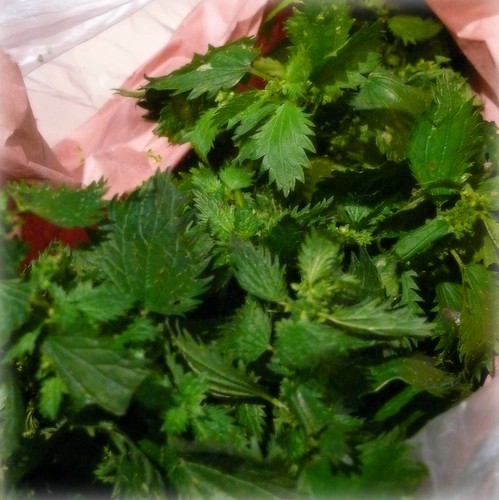
One bunch of Nettles from Glenora Heritage Vegetables, Toobanac, Victoria, blanched and drizzled with Lemon infused Olive Oil from South Australia.
Mashed Royal Blue Potatoes from Gordon Jones, Warragul, Victoria.


Photo reproduced from Gourmet Traveller


For two
people at Bistro Guillaume
- cost $90:

Whole Barossa Valley chicken, purée de pommes and sauce à la chasseur (Chicken, mashed potato with a demi glace mushroom sauce, no vegetables)


In our household, when we choose to dine out we have two streams of thought:


Moderate to cheap and cheerful food, usually from another culture, consisting of good produce cooked with traditional or regional pride.


Secondly there is the more expensive food that astounds us with its imaginative and passionate approach. Food that requires a kitchen brigade, food I would not cook at home.


So with that in mind and having studied the menu, Mr Stickyfingers and I will not be going to Bistro Guillaume. I know a number of local bloggers have already been and shared their positive experiences, but as nice an outing as it might be to sit in the chi-chi surrounds of this much vaunted venue, quite frankly Monsieur Brahimi's menu resembles the food we eat at home. Well, those dishes along with our
favourite Asian and Hungarian meals in my repertoire.


Perhaps if I were unable to acquire such good produce for myself, I might consider it. Given the marvellous concepts, innovation and exploration of new produce happening on the food scene here in Melbourne, I think that it would not be high on our list. In fact there are a number of more humble French establishments that I might choose in preference to it.


I know that although my home is small and simply furnished, the providence of the produce in our pantry is as good - and my techniques are sound. Our roast chicken was as succulent and as flavourful as you could wish for, plus we had the benefit of easily staggering to the lounge for semi-horizontal post-prandial relaxation. There was minimal prep time. Cleaning up pretty much required just throwing everything into the dishwasher.


Perhaps I am stuck up and naive but nothing could compel me to part with $90 for the same meal that I eat regularly at home.


Are the diners of Melbourne suffering from a case of
'The Emperor's New Clothes' - being hoodwinked by our fascination for the new and by the hype stirred up
following the arrival of celebrated Sydney chefs?

What do you think?


24 October 2007

SOLE Sista's


Deep Dish Dreams: Oh SOLE e mio

My post yesterday Oh SOLE e Mio turns out to have been a catalyst for chewing the fat on what we each do in our own way to eat and contribute to the planet in an ethical way. The conundrum and the expense are raised by two of my blogger friends.

It prompted The Grocer to write
Are You Ethicurean?. Here you'll find her thoughts on what a labyrinth you find yourself in, once you begin to eat your way down the path of social conscience.

The Purple Goddess has also thrown her hat in the ring with how to do it in the suburbs with S.O.L.E Foods.

I'd be curious to hear what you do.

To begin with, my aim in the long term will be to lobby government to assist in making ethical eating more accessible and affordable for all. I want better rebates for farmers willing to make changes to become sustainable and bio dynamic. I want to provide better education for family nutrition and will endeavour to enlist the mainstream media. I will encourage others to lobby supermarkets for a wider range of better produce, locally sourced and raised ethically.

As PG pointed out in yesterday's post's comments, we achieved national acceptance of recycling, so lets take things a step further for the sake of paving the way for a positive future for all.

05 October 2007

Dupleix Vs Torode trendspotters?

"John Torode has been living in London for 17 years and has become accustomed to how things are there. London has some exciting things happening on the food scene because there is money pouring in from Russia and for £200 you can eat some amazing things, but most of us can't afford that."


"More importantly in Australia we have great affordable food and can eat out several times a week and still eat well."


"In London, Nordic food is getting popular - thankfully light, clean, fresh flavours."


"Young English chefs are doing away with heavy food and are addressing British food in a lighter way......more casual.....like the Australian way of cooking. I think we actually have a lot to teach the British."


Jill Dupleix on John Torode’s assumptions of Australian dining.


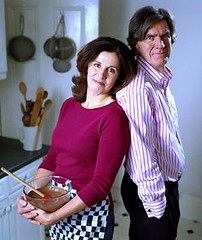
I'm not sure what compelled me to turn on the TV when I did, but there was Jill Dupleix in the ubiquitous checkerboard mini apron that she sports on the cover of her latest cookbook, Lighten Up. She was cooking one of her light recipes and telling daytime talk host, Kerri-Anne Kennelly how she helped her husband, Terry Durack, lose five belt notches of weight or six stone. Then Kerri asked her about John Torode's recent comments about Australian food (see my post, John Torode - Hidden Agenda?). Jill's response is above.

Now I have been a big fan of Terry's since the hedonistic eighties and have always hoped that I could emulate him, though sadly I will never have his incisive wit. In Jill I saw someone who was instinctively able to reflect the zeitgeist through her work first in Advertising and later in food writing.


The current book is a reflection of this, to the point that on viewing her latest recipes, I wondered whether she had been looking over my shoulder whilst I cooked for Mr Stickyfingers. Or am I too just an early adopter of global market changes by eating low GI foods, doing away with big pasta meals, cutting back on the size of our meat and starch portions while consuming more vegies and oily fish and omitting trans fats, palm oil and corn syrup?


The thing is, I don’t think I am alone here, so it made me wonder, if this book is meant to be a groundbreaking approach to eating, whether in fact Australiais ahead of the UK, where she and Terry now reside? And I say this in spite of John Torode’s assertions that what Australia has to offer is “pretty tired”.


Over here there is a growing resistance to the Americanisation of our supermarkets and the loss of favourite local brands to global brands and house brands in the pursuit of better profit margins. We also have experienced a rise in food allergies, and more people are beginning to turn to our abundant fresh produce over processed foods.

So using the marketing part of my brain, I was also curious as to what the whizz-bang £200 London restaurants are offering? I suppose some of these restaurants are featuring Molecular Gastronomy, which on our local scene is attracting the Melbourne Foodanista’s, some of whom are not really there for the food. Given the expensive machines and labour intensive techniques required, Molecular dishes don’t come cheap.


Trend spotters acknowledge that this movement has risen to prominence on the back of the apocalyptic global mood, in the wake of the rise of fundamentalism, the threat of global Terrorism and increased knowledge of Global warming. By the same token fashion is reflecting the post-apocalyptic phase of the eighties where the general sentiment was that we would either die of HIV or nuclear fallout.


Somewhere in the middle ground between the rustic trend supported by Gordon Ramsay, Rick Stein and Antonio Carluccio and ‘The Molecular’ came the East/West Fusion and the confused Global menu. Fusion done at it’s best is now accepted as an inspired and healthy fine dining choice. But the other phase, the crude global mish mash of cultures where menus listed poorly crafted versions of Laksa alongside pizza, nacho’s, tagines, sushi, grills and risotto is sadly still in existence at some of our more mainstream venues. People who favour this style of eating will never comprehend Molecular Gastronomy.


The global phase that is emerging now turns it’s back on hedonism and pretention, and perhaps the laundering of Russian money? The term that was coined for this predicted trend ten years ago was ‘Think global; act local’ a process of thought that moves from the ‘all is lost’ perception to ‘how can I do my own little bit for the future?’ has finally hit.


The extension of this in dining sees support for producers of slow grown sustainable foods, rare breed meats and heritage vegetables coupled with low food miles. Again, this is something Mr Stickyfingers and I have incorporated into our diets over the last two years. Fortunately for us, this is readily available in inner Melbourne and by shopping carefully at farmer’s markets is affordable. However, once it hits the restaurant scene as a trend, prepare to pay haute cuisine prices. Fashion-wise, look for alternative textiles like hemp and a move away from synthetics to natural and sustainable fibres.


Although this is aptly being led through smaller café venues and home cooks, in Melbourne we actually have one restaurant contender in this ‘Locavore’ food league. The 100 Mile Café, is not extortionately expensive, but as the forerunner in this league it can’t afford to be. Like most trends it will make an initial splash and then move into the mainstream where, as my new friend, chef and witty blogger The Gobbler put it, “it is merely another weapon in their arsenal of getting bums on seats.”


Whatever the trends on offer, eating in Australia is progressive and is one of the few places in the world where we have affordable fresh produce that in some parts of the world costs and arm and a leg. With Jill Dupleix asserting to food writer Matt Preston that she and Terry just make ends meet living in Notting Hill - European assignments aside -perhaps it's time that they came home to the good life?