Showing posts with label food writing. Show all posts

26 April 2012

Making Money from your Food Blog


"Any intelligent fool can make things bigger and more complex... 

...It takes a touch of genius - and a lot of courage to move in the opposite direction."

Albert Einstein


Do you wish that your blog made money?  Monetizing your blog is known as pro-blogging.

Conferences that claim to teach you how to do this are an increasingly common money spinner. It reminds me of Pyramid schemes. Make money by teaching others to teach the same thing. Follow the hashtag streams from some of these events via twitter and it is evident that they’re not saying anything new or mind blowing. 


So here are my genuine tips. For free.

In life, if you want to make money, you either become an employee or you start an enterprise. Deriving income from a blog needs to be approached in the same way as beginning an enterprise. There are some blogs that have evolved seemingly naturally from being a hobby to an enterprise but they have a few things in common:

  • ·         The blogger was filling a popular yet unexplored niche
  • ·         They put in very long hours to achieve it
  • ·         They made sure they stood out from the crowd
  • ·         They are very credible and well researched
  • ·         They were good at self promotion beyond the blog


Early in my career I was fortunate to have mentors and in return, I do the same for others, including assisting with business planning and helping my clients to stay on goal. I also help with self promotion and personal branding. 

Some of this knowledge is what you need to build a blog that is a commercial enterprise.

In any enterprise my golden rule is “It’s not about you”. Every business services a customer. Therefore it is all about the customer’s needs and their point of view, not yours. This must permeate every decision you make.


Planning


The first step for anyone considering starting out is the business plan.
  1. Set your goals – what are you aiming to achieve? What amount of income do you realistically expect to achieve in the long term?
  2. Set your exit strategy – when you have achieved your goals what will you do next, sell out, merge with another or evolve to another level? In some cases the exit activity is to become a Blooker (to self publish a book based on your blog or secure a contract from a publisher)
  3. Define your focus – every business needs a specific focus. Every commercial blog needs a set theme. To have too many themes in a blog will not serve those who could monetise it. To stand out you also need to discover and fill a unique niche. If your blog does not offer a point of difference it becomes just one in the crowd
  4. Define the personality of your brand, ie. The look, the style of writing or ‘The Voice’ you use to communicate. Imagine your brand as a person, not necessarily yourself, in order to be objective about how it comes across to others
  5.  Identify your typical reader, what they want to read, find out how frequently they read blogs and how they discover them in the first place, find out what else they read and what social networks they use. Knowing this will ensure your content always has meaning and value for the reader
  6. Select a revenue stream by looking at how you can monetise your blog. This may come via eCommerce, subscription services, syndication, advertising or writing for brands and other websites. Decide what your fees will be, create a rate card of what you will charge. Use a system that measures your online influence/reach so that you can quantify your fees
  7.   Create a marketing strategy, no blog is going to attract readers or income in isolation so publicity is very important
  8. Create a calendar of activity for posts, marketing, advertising and publicity. This not only keeps you on track but is invaluable for showing investors or advertisers that you mean business
  9. Cost out in man hours and dollars what it will take to set up and to acquire the tools to achieve a high readership and interaction with followers. You may find that you need professional help in some areas which could require a financial loan or venture capital
  10. Ascertain whether you have the time and commitment to see it through, based on examining the previous steps of discovery


In this process, Step Ten can be the biggest hurdle of all. Many enterprises fail early on because they haven’t bothered to go through the groundwork of the business plan. Working on a plan can save you a lot of disappointment.

Remember that your plan is not cast in stone. Your blog can, and will, evolve organically, but make sure you take time to revisit that plan periodically to see if you are still on track.


Revenue


Probably the hardest question in a business plan for bloggers is determining Step Six, identifying a revenue stream. The answer usually will stem from the kind of niche you aim to fill.

ADS
There is the obvious such as advertising on your site, placing Google, FoodBuzz or Nuffnang ads etc, but this will not earn you a great deal. Another consideration is that the CMS of your blog needs to be flexible enough to allocate adequate real estate to ads while still maintaining easy navigation. If viewing is hampered by ads you will surely lose readers.


SUBSCRIBERS
There is already a successful commercial model in subscription services. Essentially the blogger offers their site as a paid advertorial space, with notification of updates distributed via a subscription email service. This model makes money from advertising and from commissioned advertorial posts. 

The reason the email subscription is involved is to assist in establishing who your readers are and demonstrating your reach online, by quantifying return on investment for Advertisers spending money on your blog. If you have associated social media accounts also with a large following or reach, this can further bump up your fees but you will need to be using an effective monitoring engine in order to measure the reach of your influence.

Some Pro-Bloggers are also charging readers a subscription fee. But as per the experience of newspapers moving into paywall territory, this model will impact on the numbers of readers. If you follow this path, the quality of your content ought to be professional magazine standard, and your site should not appear amateur in structure. There should be a pay-off for subscribers such as access to exclusive or premium events and non syndicated material.


PAID CONTENT
For Bloggers whose focus is solely reviewing, a potential revenue stream can come from aligning yourself with a cluster of PR agencies. By negotiating an annual retainer from the agency, you agree to place product reviews on your blog. This can be for products, services, events or venue reviews. 

First you must do your homework and look at the PR agencies and especially what their client list is like. Only approach agencies where there is synergy between your point of focus and their clients. By law you must also state if your posts are sponsored or advertorial.

Another alternative is if you already have a large following on your blog, you may be able to bring your klout to a brand by writing paid content for online journals and branded websites. The aim is that you will drive traffic to these other sites in exchange for payment and a backlink to your blog.


E-COMMERCE
In the cooking niche, you may have hard goods that you wish to sell. There are many e-commerce solutions available for your blog, as well as offsite, such as selling via Facebook or eBay. Small businesses are able to tap into a younger market and regional markets, where customers have the desire to find unique items outside of usual business hours. 

Appeal to their desire for convenience, offer good customer service and follow up on your sales to maintain cordial contact without the hard sell. This will increase your chances of repeat purchases and grow your reputation. If you’re involved in food selling, be mindful of the law, for example in OH&S, permits, licenses, transport and other handling regulations.

This is just a handful of examples of deriving revenue from food blogs. In all instances of the above, by law you must make it clear to readers if a post on your blog is sponsored or can be considered to be an advertorial. Of course there are also the usual business finance details to manage such as having an ABN, tax implications including charging GST. That’s best discussed with your Accountant.


Getting Known


Self promotion is the other major stumbling block for new businesses. After all, marketing and self promotion is a specialty area. The basic premise is utilising your personal brand for reputation building.

An analogy I use with my own clients is ‘wallflowers don’t get invited to dance’. Don’t expect to get discovered without any effort when there are billions of blogs online.

PERSONAL BRANDING
The first step is to write a short bio that introduces you. Use it as an opportunity to share your credentials and build trust. Next create a photo avatar or brandmark that people will associate with your personal brand. Create an email address just for that brand.

PUBLICITY
Publicity is super important – you need to let as many people as you can know that you exist online. Use personal networks, social networks and press releases. Build a profile on LinkedIn that will show your credentials. Join and participate in relevant LinkedIn professional groups, from Food Writing to Blogging.

BEING SOCIAL
It is also important to interact with fans through your comments section and social media. Chat is vital, as opposed to just broadcasting a link to your latest post. It is also vital to comment on other blogs. Use genuine interaction and contribution in your comments. Resorting to sock-puppetry is taboo and can destroy your reputation. Link farming isn’t as important as it used to be but it can be helpful to appear on blog directories and lists.

GUEST POSTS
Guest posting is important. This is either via inviting other popular bloggers to post on your site or to submit a post to another site, community or blog with a very large readership. It’s basically all about discovery. Submit pieces to traditional media - you may not be paid, but if your content is used, request a byline and a backlink to your blog. Also comment on traditional media stories that have relevance to your blog and always include a backlink to your own site.

CONNECT
If you use multiple social media accounts ensure that your avatar and bio, as well as the tone of voice, are consistent across all of them. Make it easy for readers to follow your other social accounts by adding social media buttons to your blog and always add share buttons so that you content can easily be distributed by your readers to a wider audience. Facebook plug-ins are also a great way to get your content noticed around the web.

CONTENT AGGREGATORS
If you are a food venue review blogger, you can publicise yourself by having a presence on social platforms that specialise in reviews, beyond the obvious Urbanspoon and Foodspotting sites, consider travel review and booking platforms, Local Area Marketing sites such as TruLocal, Restaurant booking platforms and geo-spatial social platforms such as Yelp and LinkedIn.

Non-review food blogs or product review food blogs should consider submitting posts to Food aggregators such as Tasteologie, Foodgawker and Tastespotting. Also consider having a photo offshoot on Pinterest if it is relevent to your subject matter.

Remember to maintain the same avatar and bio wherever you post on social networks so as to be recognised. In this way you are not only discovered by more people, you also build your reputation.


The Gristle


My character ‘Sticky of Deep Dish Dreams’ - aka Stickifingers - has been a great way to engage with other food lovers. One of the best aspects is meeting people offline, some of whom read my internet musings and a few have become firm friends. Blogging is a great hobby.

Over time I have achieved a wide reach of influence by using multiple social channels, including Tumblr, Twitter, Facebook, Instagram, Yelp, Tripadvisor and LinkedIn to name a few, and am regularly asked by commercial interests why I don’t monetise this blog. 

The answer is that I already have a career in Social Media Strategy that keeps me on my toes with its daily changing processes, etiquette and platforms. To monetise a blog is to create another career path. And I prefer to use what I know, to get others on a happier path.

So if can leave you with one thing to chew over, if you aim to monetize your food blog, to achieve success it will cease to be a hobby and become a job that requires a great deal of concerted effort.
Do you have the courage to take that step? Only you can know.


If you wish to check my credentials or to discuss professional matters,
you can reach me at this link.
Please note that press releases and promotional material sent to me there
will be treated as spam in accordance to Australian legislation, as per the statement in the sidebar on this blog.



26 October 2011

Food Bloggers as Marketing Puppets | Part 2. Marketing Tricks and Psychology


Photo by Sean Bonner


“Your vision will become clear only when you look into your heart.
Who looks outside, dreams. Who looks inside, awakens.”
  
Carl Gustav Jung
Swiss psychiatrist, Psychologist and Founder of the Analytic Psychology, 1875-1961


Hook, line and sinker

In Australia if the traditional Food Media want to incite an online riot of opinion, they merely need to criticise Food Bloggers. It’s a story guaranteed to hit a raw nerve that is common to all bloggers: the validation of their medium. The provocation will result in debate and a frenzy of hits and backlinks to the article from bloggers, tweeters and readers who subsequently comment across many social media platforms.
But what many amateurs in the online space do not realise, is that they have deliberately been tricked into rage. The whole exercise may have been calculated to create a spike in online newspaper readership figures, to lift the number of page-views, organically boost the paper’s SEO and online influence figures. So the respondents involved will have played right into the hands of the newspapers for marketing purposes.
By publicising the story and spreading the word in social media, the bloggers and tweeters have unconsciously created sufficient free PR to yield above average traffic to the newspaper. The resulting online figures now look great to advertisers contemplating whether to pay for ad space in their publication, iPhone app or online edition.
Some might consider this calculated emotional abuse. For the paper it’s an easy win, requiring no financial investment, and with their readership looking reinvigorated, they can potentially rake in hundreds of thousands of dollars from brand media buyers. Thanks to bloggers, the sales and marketing team will likely have hit their projected targets.
These stories are known as link bait. It’s a controversial marketing ploy and is not the only time that Aussie food bloggers fall for commercial tricks.
This works through psychological manipulation. The technique in this case is known as ‘shaming’ and ‘vilifying’. Think of it as the overbearing parent who tells their children that their grades aren’t good enough. It’s bound to get a reaction from most on the receiving end of the criticism. And yet the same result can come slyly packaged as flattery, for the same purposes.

Modern Marketing Ninjas 

As long time readers of this blog will know I have spent a quarter century in the business of advertising and marketing. My profession has been to make all manner of things desirable to the general public via a mixture of manipulative psychology, beautiful imagery and by generating hype. My technique uses a combination of strategy based on psychographic manipulation and lateral thinking combined with creative input. 

Today anyone marketing a product, service, venue etc, faces tough times. The general public are now more sceptical of marketing imagery on TV and in print than they ever have been. They can filter their entertainment to avoid most advertising that they find intrusive or annoying. Some products have even been banned from traditional advertising media. So with marketers facing increasing sales targets from their employers, the search has been on to find a way to advertise surreptitiously. 

And what exactly is this hidden advertising or guerrilla marketing? The most common ninja deployed is product placement. Take Australian Masterchef for example. The products you see being used have been provided by the brand advertiser in exchange for six figure sums to the TV production company. 

This may be reinforced by advertising around the show, costing millions, paid to the TV network - whether aired on TV or their magazine’s ads or even on the Masterchef website and recipe fact sheets. The aim is that the general public will subconsciously identify branded products as being desirable or necessary next time they stock their pantry. The wealthiest brands also use product placement in Hollywood movies and popular drama or comedy TV series, reaching significantly larger audiences.

But shows like Masterchef are not on TV all year, so food brands in particular - and especially those with smaller budgets - are forced to be more creative in finding their target market. 

The trending buzzword for advertisers is ‘Word of Mouth Marketing’. The power of recommendation by a friend or trusted source is now recognised as the ultimate way to convey a marketing message that will generate sales.

Magazine or newspaper Advertorials are a word of mouth option. It looks to all intents like a magazine story, it has been composed by a journalist and the staff photographer, but it’s actually a sponsored piece, a revenue stream for publications. It costs the advertiser in design, photography and media placement fees.

Advertorials are designed to trick you into thinking the ‘discerning Magazine Editor’ prefers that product/brand. Advertorials state ‘advertising feature’ or ‘promotion’ at the top of the page revealing its true nature. But even this is wearing thin with the public. So where else can advertisers create hidden influence?

There is a marketing term, “Hitting all the consumer touch points” and that now also includes product placement and advertorials or infomercials on blogs. So bloggers who have appeared in mainstream media stories, who have released details of high page view numbers, or high Twitter follower counts and a track record of influence, are the new target for marketing. 

They are known generically as ‘online influencers’ and are now subject to heavy lobbying by PR companies and advertising agencies. Many of us in food blogging know it as the dreaded PR spam in marketing circles it is known as Blogger Outreach Programs and Blogger Bribes.

The attraction lies in the notion that an advertiser can covertly target the exact demographic required through a food blog. Just as they can in the food press, but with possibly an even narrower skew – such as Baker blogs having a high readership of those who also love to bake, or venue review blogs that back-link to Urbanspoon and attract people who regularly go to restaurants. Plus bloggers are more adept at using multiple social platforms including Twitter, Digg, Stumbleupon and Facebook in their broadcast mix than traditional food media, which equates to even more publicity hitting the target.


Your new BFF 

So, in Advertising strategy, bloggers are now seen as cheap and easy puppets for marketing messages as compared to traditional forms of advertising. By example, many food bloggers have already shown a predilection for going to events and receiving freebies in exchange for a blog post on their attendance or promotional item, so why not cosy up to them? Brands now aim to be your BFF.

 After all, most who write blog review posts, will happily spend their own money trying venues and unsuspectingly giving free PR to the venue, so in advertising terms, why not extend that to products, loyalty clubs and services too? The potential is there for a brand’s new online ‘friends’ to generate free blog advertorials and extended social media broadcast too.

For brands, blogger outreach is significantly cheaper than paying publications for the same. Plus the blogger does all the design work, copywriting and photography for free - services that cost tens of thousands of dollars to commission professionally. Giving away samples, organising an event or junket to bloggers can be much cheaper by comparison.

It’s also a way for PR agencies and Blog Harvesters such as Nuffnang, Technorati and Foodbuzz to farm bloggers in order to make money on the back of this free resource. Typically it works by charging brands for harvested email databases or for permissions received from the bloggers. Some harvesters will potentially pay bloggers a small fee lower than market value for commercial digital insertions in return. 

Others companies to farm bloggers are market research companies and new hybrid harvesters who charge bloggers to be part of a directory that will build page rank and SEO plus marry your blog with advertisers and PR agencies.


Trust issues 

It is a given that journalists’ salaries are derived from publications’ advertising revenue, and hence edited opinions can be biased. So blog readers typically cite their interest is due to content being unrestrained by editors, advertisers or a commercial publication’s particular values or politics. Marketers are aware that many of the public have eschewed papers and magazine for blogs, in search of the truth. 

So blogs appear to have integrity. It is generally supposed by the public that they are not affected the way that news has been tainted. They represent Jo Average’s opinion. So when a blog broadcasts about brands, the reader assumes it is a personal and unbiased opinion and recommendation that has not been initiated by an advertiser or fuelled by supplied content. 

But this is increasingly not true. A blog post can be a ‘Stealth Marketing’ brand ninja, especially where many amateur food bloggers have not publicly declared their shift to becoming professional salesmen, or pro-bloggers in exchange for gifts or money.

This is compounded by the fact that bloggers seem to be unaware of the ACCC Advertising and Selling standards stating advertisers should “ensure that consumers are aware of the fact that a commercial message is being presented”. 

Bloggers are required to clearly mark that the post is a sponsored piece, as per an advertorial or infomercial is transparent about its bias. It’s possible that many PR agencies and marketers seem not to know this either or perhaps are happy to parlay the deception and puffery?

Since some food blogs have already fallen under the spell of the PR machine, the term Flogger-Blogger has emerged. By this I mean when a blog that feels to all intents as though most posts are actually subliminal ads, designed to have your friends share the good word and generate publicity for a brand by spreading the post across the internet, conversations and by email. Ultimately this is the goal of marketing through amateur bloggers.

The Seduction of Eve 
I think that most Australian food bloggers have innocently entered the media as a place to air their thoughts, but appear vulnerable to the potential traps of that space. The traps I refer to are those of potential loss of integrity and falling victim to commercial manipulation. And I sense that some Food Bloggers are falling victim to Fox and Crow syndrome.
So what are the tricks to look out for? Behind most modern marketing tricks is psychology - the study of human behaviour - and how to take advantage of these insights to assist selling things. 

"According to George K. Simon, successful psychological manipulation primarily involves concealing aggressive intentions and behaviours. Also, knowing the psychological vulnerabilities of the victim to determine what tactics are likely to be the most effective."
The most fundamental aspect that is taken advantage of by marketing and advertising is the human desire to feel good. It is thought that we tend to see our life as judged against other people and that our happiness is relative to this.
We compare our lot against others. Richer people do get happier when they compare themselves against poorer people, but poorer people are less happy if they compare up. That is why Marketers target our self esteem when aiming to seduce us for their purposes
Nathaniel Branden in 1969 defined self-esteem as "...the experience of being competent to cope with the basic challenges of life and being worthy of happiness". According to Branden, self-esteem is the sum of self-confidence (a feeling of personal capacity) and self-respect (a feeling of personal worth).
He also claimed that any positive stimulus or incentive will make a person feel comfortable, or, at most, better with respect to themselves for just some time.
So when a PR company, brand or Marketer approaches a blogger to promote their cause, they will – like Eve’s serpent – cajole and flatter us, tell us that we are deserving of special treatment and offer a sense of personal exclusivity that will make us feel a step ahead of others. They will talk it up with honeyed terms such as “You have been especially chosen to become a Brand Ambassador” or appeal to your desire to have something you can’t afford.
Society has been warned against this behaviour for all of time. Religion and the arts play it out as an enduring theme, cautioning against allowing our shallow desires to trip us up. Yet it proves constantly irresistible to this day, the tactic of ‘positive reinforcement’ is one of the most powerful to encourage Bloggers to generate income for others with no significant remuneration in return for their services.

A mere pat on the head
I like to think of the next trick as summed up by the adage ‘Beware Greeks bearing gifts’ the ‘Trojan Horse’ analogy. While we may warn children not to go with strangers offering gifts, bloggers seemingly also neglect to take that advice. Instead, they are fooled into dropping their guard.
A blogger’s vulnerability in this case is typically coined in psychology as using ‘reciprocity’. The trick is, when given something for free we feel obliged to return the favour. So in our circles when offered a free meal, product, event, book etc, we feel indebted to write a blog post about that gift, often without criticism or significant insight.
Like a dutiful child, we write a public thank you note on social media platforms, which form free publicity for the marketer, brand, service or venue. We take photos, design and cultivate a post – often giving away our intellectual property rights in the bargain – and with theoretically even better results for the brand than ads, because blogs communicate to exactly the right consumers for the promotion.
So the marketing goal is achieved. For virtually a fraction of the cost spent on advertising or loyalty marketing, the blogger has obligingly become a puppet, as a brand salesperson.
In return, the blogger likely receives a regular deluge of press releases with the expectation of future publication each time, with little or no further reward or remuneration for giving away many thousands of dollars of free PR.  In the psychology of persuasion this is known as ‘consistency’.  People want to be consistent with previous actions. If they said yes to something in the past, they’re more likely to say yes in the future.
Meanwhile the PR agency that approached the blogger in the first instance will be receiving a monthly retainer for their services and possibly project fees – but who really is doing all the work here? Who has generated the sales? Who deserves to be paid?  It is the Blogger.
In some other blogging circles – particularly pro-blogging and the influential fashion, beauty and parenting blog communities – this has begun to change, with some bloggers receiving fees directly for their publicity.

Sex and greed, and power
The adage ‘Sex Sells’ referring to scantily clad women in advertising is an old cliché. But sexy is not always so literal. The psychological equation for using sexy persuasion on a blogger for the purposes of converting them to brand salesmen is greed + power. The tactic used appeals to their materialistic impulses, to narcissism and to jealousy.
The technical psych theory is sexual attraction arises when the person is stimulated through the vanity mode of narcissism. It engenders admiration for compatible personality characteristics. Excitement arises when the person is stimulated through the self-pity mode of jealousy, engendering physical intimacy and passion, which theoretically will result in eager and enthusiastic broadcast.

Relative to bloggers, for the social type person, power is channelled through jealousy. For example subconsciously: “This blogger junket will make me feel good and my friends, colleagues etc, envious – they’ll likely find me even more fascinating”, hence the blogger may unconsciously feel sexier for there is social approval and admiration from others.

For the self focused person, power is channelled through narcissism, eg. “They’ve spotted how good I am, so they’ve given me a ‘money can’t buy’ experience, I’m getting something huge for nothing”. The subconscious perception of social reinforcement makes the blogger feel powerful and that in itself is sexy to many.

The overall picture is most people, unless aware of the tactics, can be manipulated. In Blogger Outreach programs the brand they will promote is getting the blogger’s services and time for a fraction of the usual marketing budget, by making the blogger feel a bit sexier, giving them a sense of power and all by appealing to their vanity in order to make them brag. In return the blogger gets a temporary hedonistic head rush and feels an obligation to the brand when they come down off the back of their experience.


The Spin Cycle

So how do else do marketers appeal to a blogger’s deep human impulses for commercial manipulation? They use ‘Spin’.

Spin is “Making a silk purse from a sow’s ear” or “Spinning gold from straw”. It is a form of deception to make something more enticing than it may appear in the cold light of day. It takes the consumer’s aspirations and projects them on a product, venue or person.

Often putting spin on an item avoids facts and focuses on implied benefits. And when applied to politics, is termed propaganda. Using psychology to understand what pulls at the heart strings of the target market, an advertiser will know exactly how to project something to make it seem enticing and highly desirable to consumers.

Spin Doctors are primarily the creators of consumer zeitgeist, ‘future cool’, Cool Hunters and the initiators of global trends. They read public sentiment, understanding how economic movements affect public values and shape cultures. Now when something is suddenly ‘hot’ often it is because key community influencers, like bloggers, were persuaded by the hype, publicity and promotion generated by Spin.

As an example, consider the current Australian fascination for macarons. It started buzzing amongst sweet and bakery enthusiasts and was identified by Spin Doctors as a possible emerging trend within the culinary fashion for small indulgences, such as dim sum, mezze and tapas.

From here it began reaching into online food communities – sometimes via astroturfing, sock puppetry and link baiting.

Advertisers and journalists now typically eavesdrop on social media platforms, so once they picked up on the emerging vogue, the macaron buzz then made its way into commercial marketing and food media. And the coup de grace was an appearance on Australian Masterchef, which in turn exploded its popularity into popular mainstream appeal.

The concept has rippled back from the mainstream into blogging communities beyond food and across Twitter, Facebook and other popular communities. There have been a flurry of macaron shops, books, recipes and classes by those jumping on the bandwagon and finally, it has resulted in a demand for $400 macaron towers. That’s a purchase that three years ago would have sounded totally absurd and not at all enticing to the general public. And it was all in the Spin.


Nailing your colours

In my last post I stated that I feel it is time for food bloggers to nail their colours to the mast. I have witnessed the original integrity of blogging as being diluted by advertorials and product placement.

While I have my doubts about the value and quality of Blogger Outreach in Australia, it is not something that is going away. My stance with clients is that online influence and viral marketing reach in Australia comes voluntarily from bloggers perceived as having high integrity, not just whoever responds to a PR call.

Those who write commercially sponsored posts, have a duty to inform readers or subscribers that a post is an advertorial, which will allow them to determine bias.

Unless presented with a contract or express a commitment to do a piece, a blogger is not obliged to write about a Blogger Bribe they have received. And should a blogger consider publishing a sponsored post based on a product, event or reader giveaway, I feel that they ought to be entitled to ask for payment ahead of posting it. It is to all intents an advertisement for which the blogger provides the media and the content.

If you have no desire to engage with brands and no wish for your blog to be a vehicle for their sales pitch, you may already be annoyed by spam press release emails.

Because there are some grey areas regarding permissions, the ACMA recommends those who do not wish to receive commercial offers, put a non-solicitation disclaimer on your blog. Just as I have in my sidebar, under the subhead ‘email’. I placed it there because typically email is the key word a commercial email harvester is looking for.

When I receive PR spam in spite of this, typically I respond by drawing attention to the statement. In Australia, by law there should also be an unsubscribe link on the email, which I will use if I trust that it is a verified Australian PR agency. And if the spam persists, I am not above reporting the email as contravening the Spam Act 2003.

In deciding whether to participate in promoting commercial messages on your blog, consider the theory of the Hedonic Treadmill. “According to this theory, as a person makes more money, their expectations and desires rise in tandem, which results in no permanent gain in happiness”.

After years of working with brands, I find I don’t need much in the way of consumer durables and hedonistic activities to be happy. Close ties to friends and family, plus good health are the things that count most to me.

I don't merit grinding away on the treadmill to generate money for brands without being paid for it. When I come across something I like, I will tell you about it and you can trust that it was not skewed or initiated by a third party.

Most crucially, I’ve learnt that keeping things simple ultimately makes you happier and better respected. With this integrity your opinion is trusted and well regarded. And unlike free gifts it brings lasting happiness.


07 January 2009

A Road Map for Epicure


“The cook doesn't want to be locked away in the kitchen anymore. He or she wants to be around the guests, ... That means that kitchen appliances suddenly become like a sofa and table - things that everybody is going to look at. I think it's a real indication of where we are in food culture today."

Ruth Reichl


How would I feel if I had recently been annointed the new Editor of The Melbourne Age's food supplement Epicure? Most probably I would be quaking in my boots.


From past experiences of being meted out daunting challenges, I know that I would rise to the occasion, so why the dramatic knee trembling? Melbourne Foodies are savage critics. By Foodies I mean the phalanx of media consuming Gastronauts who consider themselves well endowed of the metier gourmand.


They dissect; they nit-pick and they enjoy a grumble amongst their community. I expect that there is not a journalist who has been on the staff of the publication who has not been lambasted pompously over a few buckets of semillon sauvignon in the eastern suburbs or muttered at in restaurants. And let's not forget online. After all there's been a hearty flow of criticism between both Australian Bloggers and the traditional food media.


In the column to the right I have a section called "Stickyfinger's dream food magazine contains these stories...". It is a cross section of blogs from my feed reader. The blogs included are diverse and run from the poorly written to the professional. There is humour, audacity and pathos, events, reviews, food themed trends, restaurant news, recipes or tips and foreign tit-bits. But most of all they reflect what's real in our food community from writers young and old, the battlers and the affluent. In short, it's relevant. More relevant than Epicure has been.


I think the reason I stopped buying Epicure was because the reading online was so
much more rich and juicy, so ripe with deliciously outrageous opinion and way less sycophantic than the newspaper. The information available online is often better and generally speaking, the food porn's more tantalising. And the language more colourful. OK, I understand that in print there are advertisers to appease and litigious types to avoid, but the material that surfaced in Epicure was becoming as dry as mouthful of Salada's to me.


So to the new Editor of Epicure, here's my wishlist of new things for your rag in 2009. Please consider:


  • 'Going Dutch' - When restaurants are reviewed, publish at least two opinions - and don't publish the photos of your journos so they have some hope of anonymity and objectivism
  • 'Vin de Siecle' - Give us more stories about wine regions - both old and new world so we can understand what is on offer in the bottle shop
  • 'Provenance' - A regular column that singles out one of the rare breed meats and one heritage fruit and vegetable, available at farmers markets and organic stores (what, wherefore and how to use them)
  • 'Waiter there's a blog in my soup' - Publish a juicy blog post, excerpt or photo that you've found that week, with the consent of the author of course
  • 'Just like Mum makes' - Australia has migrants from more than 50 countries, so a monthly piece on an homecooked meal from one of these cultures would be relevant - and please, not some aproximated version by a staffer. Recipes that work in a home kitchen with the same techniques used by Mama
  • Gadgets - road test new devices on the market from silicon cookware to Thermomixers
  • Kids - a humourous column on eating with them, hints on how to get them to eat new things and a recipe
  • Sustainable food - farming, eating, family budgeting and keeping a green kitchen
  • Kitchen porn - show me some drool worthy kitchens and how they're laid out. Even show me Chef's home kitchens
  • Letters - let's read about the Melbourne Food Nazi's grievances and delights

...I could go on, but one last suggestion, 'Morning Glory' - A weekly column on breakfast venues - and I'll be more than happy to write it for you - LOL!


What do you think? What would you like to see in the new Epicure?
Disscuss it here...


22 January 2008

Cooking Karma aka Vegie-Gate


Cookbook Author Sues
Jessica and Jerry Seinfeld

for Copyright Infringement and Defamation

NEW YORK, Jan. 7
PRNewswire/Reuters


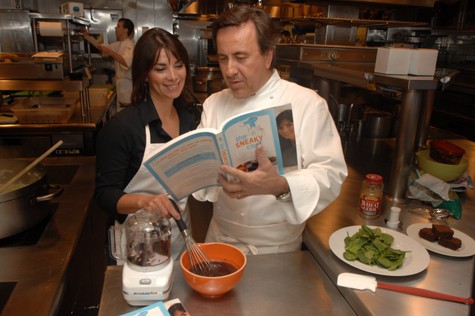
Attorneys for Missy Chase Lapine, author of "The Sneaky Chef," today filed a lawsuit against Jessica Seinfeld and Jerry Seinfeld for copyright and trademark infringement and defamation in Federal District Court in New York.


The lawsuit alleges that Jessica Seinfeld blatantly plagiarized Ms. Lapine's book, "The Sneaky Chef: Simple Strategies for Hiding Healthy Foods in Kids' Favorite Meals," a critically-acclaimed and commercially successful cookbook with an innovative approach to improving children's eating habits.

"The Sneaky Chef" shows parents how to, among other things, camouflage purees of carefully selected fruits and vegetables as ingredients in less healthy foods that kids like, such as cheeseburgers, pizza and brownies. Running Press Books, an imprint of Perseus Books, published "The Sneaky Chef" in April, 2007, generating positive reviews and quickly becoming a New York Times bestseller.

Six months later, in October, 2007, Jessica Seinfeld released a substantially similar book, "Deceptively Delicious: Simple Secrets to Getting Your Kids Eating Good Food."

Prior to the publication of "Deceptively Delicious," Ms. Lapine saw promotional material and alerted her publisher to the striking similarities between the two books, including cover art, subtitles, structure, design and overall look and feel.

Running Press, seeking to prevent any violation of Ms. Lapine's rights, brought the striking similarities to the attention of Jessica Seinfeld's publisher.

Jessica Seinfeld's publisher, which had earlier reviewed and passed up a book
proposal by Ms. Lapine, nonetheless published the book with only insignificant changes. The lawsuit lists detailed examples of identical language in the two books.

At the same time, Jerry Seinfeld went on a malicious campaign against Ms. Lapine, publicly calling her a "nut job" and "hysterical." On an appearance on 'Late Show with David Letterman' in October 2007, Mr. Seinfeld called Ms. Lapine a "wacko" who had been "waiting in the woodwork" for a chance to attack the Seinfelds. He also asserted, incorrectly, that the two books came out "at the same time." The lawsuit cites several examples of defamatory language by Mr. Seinfeld, apparently intended to intimidate Ms. Lapine.

"This action for copyright and trademark infringement and defamation arises from conduct that gives new meaning to the terms 'arrogance' and 'greed,'" states the lawsuit.

The lawsuit also points out that Ms. Lapine is the former publisher of Eating Well magazine, is on the faculty of the New School and has extensive experience in child nutrition. She also serves on the Children's Advisory Council of Morgan Stanley Children's Hospital of New York-Presbyterian, where "The Sneaky Chef" recipesare used with pediatric patients.

The lawsuit also notes that Ms. Lapine began researching methods for getting children to eat healthier foods five years before her book came out. She conducted numerous taste tests, focus groups and interviews, consulting extensively with leading nutritionists, pediatricians and chefs.

Ms. Lapine is represented by Marc E. Kasowitz and Mark P. Ressler of Kasowitz, Benson, Torres & Friedman, LLP.

SOURCE Marc Kasowitz,
Kasowitz, Benson, Torres & Friedman, LLP


It is proven that the power of celebrity and strong Media Public Relations can have a significant impact on the success of an idea. It is also a dead certain way in the USA to attract litigation. Jerry Seinfeld with his celebrity clout and Jessica with her PR background are now discovering this.

It seems their cook book's publicity backfired after an appearance on The Oprah Winfrey show, when as per usual Oprah was pushing all kinds of food that had been sitting under studio lights into her mouth voraciously. A number of viewers began to report the similarity between the two books, and as it turned out, Ms Lapine’s proposal had been circulating long before the Mrs Seinfeld nee Ms Sclar’s, but as it lacked the ‘Star power’ that the Seinfeld name wields, had seen some early rejections from Publishers.

Jerry Seinfeld’s attempt at damage control, or perhaps to garner further PR has resulted in a defamation suit. You can read the actual papers filed against the Seinfelds on The Smoking Gun.

Now I am not a fan of Jessica Seinfeld’s ideas or of her cookbook. I abhor both author’s concept of treating growing children like infants by feeding them pureed vegetables when they refuse to eat healthy foods. Hiding vegetables in other food? Hiding spinach in brownies and Kumara in hot chocolate? You’ve got to be kidding.

How is a child to learn about the texture in food and contrasts of taste when you pasteurise their diet to feature only what their unsophisticated palates and minds want? How do you expect a child to grow into a vegetable eating adult when they’ve never seen whole vegetables on their plate? How will that young mind react when believing that they hate vegetables, they find out that you’ve been duping them?

I think Oprah Winfrey was remiss in promoting Jessica’s book and helping to send it to the top of Amazon’s best selling list. Nutritionally, eating twice-cooked pureed food does not give much benefit in terms of fibre or dental and gastrointestinal health to a growing body.

OK, I admit I’m not a mother but I have had experience with obstreperous children and I know that you never give a child the upper hand over you. Their brains are developing, they do not know what’s good for them and as adults it is our task to teach them right from wrong.

The fun in food is in discovering new things and experimenting with colours, textures and flavours. The theatre of dining and the kitchen can be very entertaining for children and the earlier you involve them, the better equipped they will be to make healthy eating second nature.

But sadly I think there is a certain kind of parent who does not realise this, and I think that in the US especially, the demise of sitting down to a family meal at the dining table, away from TV and computers is contributing to the poor diets of children and teenagers.

By the way, neither party involved in the cat fight mentioned above is an innovator with their ‘hidden food’ books. Apparently they are predated by another author, Jane Kinderlehrer who earlier wrote Confessions of a Sneaky Organic Cook: Or, How to Make Your Family Healthy When They're Not Looking!(1972).

Get real people and get to know your kids better.
Read more at The New York Times.


05 December 2007

Sip-sup n Scribble. On reviewing food.

Ruth Reichl in disguise?


“Food reviewers are an enigma in that they are rarely seen by the general public. They are a powerful beast that you know of but don't really know. They are like the little man behind the Wizard in the Wizard of Oz. From the outside, they are all powerful, but really they are just normal people. They have their own opinions, as do all of us. This point was brought home when I read Adam of The Amateur Gourmet's post about meeting the New York Times food reviewer, Frank Bruni. Adam, with his blog, is starting to wield a lot of power in the food arena. However, he was still awestruck to meet Frank. Slowly though, he realised that Frank is just another person who likes to eat and gets to express his opinions to a larger audience. That's actually comforting to know, that food reviewers do enjoy their jobs and are doing it because they love it. If they are doing it purely for the money, then their review will be a lot less reliable for me personally. I have found that I turn to a lot of blogs nowadays for an "average" person's point of view. The "average" food blogger is a lot more knowledgeable about food but still, all write from the heart as we have nothing much to gain from it.”

Thanh, ‘i eat therefore i am’, 04.12.07


The above paragraph is taken from a post by fellow Blogger Thanh. I made his exuberant acquaintance recently at The Bloggers Banquet.


I believe Thanh’s post reflects the opinion of a number of Food Bloggers and of those not employed by the media, who regularly read food articles. Although I don’t share this opinion I expect many do.


Quite some years ago I had the pleasure of being commissioned to write for Epicure and associated publications under the stewardship of Stephanie Wood and John Lethlean. I gave it up when my day job turned into the captaincy of the local arm of a multi-national corporation.


When I began as a food journo I imagined the power of a review to build or sabotage business. However, when I examined the readership of culinary media, I realised how low the figures actually are. So it occurred to me that they influence only the people who think of themselves as Foodies. The majority of diners are not influenced and the newspapers use food supplements as loss leaders to gain a slight edge on figures when publishing on the slower days of the week.


The food media publications – and I expect blogs - that have the highest readership are recipe focussed, not review driven. Food review guidebooks are used in the main by business people who entertain regularly and by Foodies looking for the next ‘Big night out’. A handful are purchased by travellers, especially business travellers.


The notion that a Food Reviewer working for a publication doesn’t have their heart in it, and are just doing it because it pays, seems preposterous to me, having worn that hat myself. Nor are they simply Bon Vivants with an opinion they are eager to share. Food reviewers bleed and shed tears too. They write from the heart, with objectivity and knowledge to temper the mix.


Professional Food Writers are quite thin on the ground in Australia, which is probably just as well given our tiny market. Most have a journalistic background with a strong interest in food. In some instances such as for Terry Durack, Jill Dupleix, Leo Schofield and myself, they come from Advertising and Marketing. In a few instances they are former Chefs such as Matthew Evans. You cannot review if your heart is not in it and you must at least have a developed palate, high-level literary skill and investigative instinct.


I don’t hold with the notion that the average food blogger is more knowledgeable than the commissioned media’s reviewers. The reality of having the job forces a professional reviewer to investigate and to learn beyond that of someone making a hobby of food reviewing.


Many bloggers do not bother to talk to, or read up on the chef or the venue, its management or even to discern the country of origin of the cuisine before writing their review or making comparisons. A blog review is often a regurgitation of ‘what I ate last night’ based on a single visit, unlike a reviewer who has visited several times and tasted a wide range of dishes, spoken to the chef and reviewed the history and philosophy of the venue, as well as press releases, before even hitting the keyboard. The objective is to provide us with an educated opinion.


I admit that I am sometimes amazed when I find that many food reviewers actually don’t cook that well themselves. They have the knowledge but not the executional skills. I suppose full time food reviewers don’t have much opportunity to cook.


Bloggers are often the opposite. When I wrote my review on Mama Ganoush on this site, I was asked how I knew so much about the food. It is all based on being raised with a focus on food and the culinary, by being an avid reader and researcher, and of bothering to take master classes held by chefs to get a better understanding of food and techniques that I am not familiar with. This helps me when I eat in restaurants.


The realities of being a professional food reviewer often sort the wheat from the chaff in the execution of the role. It separates those who dream of it, from those who can actually cope with the demands of the job.


First of all it is not a highly paid industry. To survive you need to syndicate your articles and sell yourself to other editors in order to write for several publications. I earnt significantly more in my day job and even when the offers came through to write for others and be the Food Editor for a fashionable magazine I chose to follow other, more lucrative career goals, where I still got paid to dine out.


To be a reviewer means eating richly so often that you begin to lose your tastebuds. You have to be happy to drive all over the state to do it and eating review meals takes precedence over enjoying the company of friends and family, especially if you are writing for a guide where you could be reviewing 20 or more venues in a short space of time. You sometimes feel desperate for a simple home cooked meal.


You get bloated and fat. You learn not to eat everything on your plate. Outside of the eating you have the pressure of surreptitiously making notes, recording menu items and wine lists. There is research to be done. Making deadlines on time when you feel uninspired to write something scintillating, copping editing of your preciously constructed sentences by others at the publication, disagreeing with your boss’ opinion of a venue and finding the time to interview chefs or managers can add to your stress levels.


This is not a job where you can delegate to a fleet of underlings while you keep an eye on the big picture. You constantly keep your ear to the ground for news and gossip, discovering new venues and following the movements of chefs from venue to venue. You need a foot in the door of the hospitality industry to provide this ahead of the competition and sometimes you need to be unnaturally sycophantic and mellifluous in your endeavours.


As a writer you must be fluent, have a rich vocabulary and develop a strong literary voice that distinguishes you from others in certain articles, but you must also be able to adopt a generic tone to suit other publications.


You need to be creative, nosy, presumptuous, witty, well read and be able to succinctly scatter observation with culinary knowledge and understanding of the ingredients, influences, heritage and techniques that have built a dish. And most of all you need to entertain and hold the reader spellbound, so they feel that they can taste, chew and smell the dish through your words. A good writer can draw the bow laterally and accurately to inspire you with their analogies.


In some cases you have to squeeze all of that into a mere 100 words. The art of succinct minimalism can be the hardest for untrained writers. And then there's the dreaded catch phrase - avoiding falling into that trap - or using the same words over again like cheap, juicy, akin to, redolent and delicious.


The worst lot of it all is eating really mediocre food in average venues with sloppy service most of the time. And of having to write it up without being too scathing, in case the restaurant becomes litigious.


Then there's the dreaded paper work, spreadsheets, invoicing, billing and tax. Waiting to be reimbursed for your outlay on meals, expenses etc by the publication can leave you seriously out of pocket.


I could go on. The bottom line is that reviewers are not superhuman. They are hard working and sometimes prone to lose sight of the big picture thanks to the trials of their endeavours. If they have their photos published they will never again be able to publish an objective review unless they, like Ruth Reichl, wear a disguise. It is at this point they fail us, or if they are known to be on a retainer from a restaurant management group, they lose our trust.


There is room for both digital and printed media reviews. Blogs are as valid in their own way, but you cannot discount the endeavours of the pros. Perhaps it is more the case that we need a wider set of opinions in our publications, where multiple reviewers give their opinion on a venue in the one article. In England, Observer reviewer Jay Rayner advertised for a dining companion and consequently invited a blogger to join him for a comparative review. Perhaps this is the way forward here in order to offer a balanced opinion of a venue?