Showing posts with label comfort food. Show all posts

14 July 2008

Comfort Food. The price of humility


I long to accomplish a great and noble task, but it is my chief duty to accomplish humble tasks as though they were great and noble. The world is moved along, not only by the mighty shoves of its heroes, but also by the aggregate of the tiny pushes of each honest worker. HELEN KELLER


Each day I thank the universe for the good fortune of living in a country where at my fingertips I am able to source the most wondrous fresh produce with origins from nations around the globe.


And when I pause for thought, I wonder why so many people turn their backs on this to trawl supermarkets for the sake of convenience, looking for products that will enhance the flavour of the lacklustre commercial produce that fills their trolleys...


...While others are willing to pay a chef $90 for the same simple meal that I have placed on my own dining table at a fraction of that cost.


My meal
- five serves total cost $22.


Roasted whole Milawa Free Range Chicken, hand raised in the Ovens Valley of Victoria, fed a diet of mixed grain, pasture and Spring water, chemical and hormone free, sustainable and Slow Food.


Under the skin and in the cavity:
usufruct Lemons from a neighbour, plus lemon thyme, Murray River Salt and Currawong Robust Extra Virgin Olive Oil. In the pan to deglaze - Gooramada Riesling from Rutherglen.


Pan juice gravy made with my own thirty month old Masterstock consisting of Milawa chicken carcasses, cassia bark, coriander pods, star anise, fennel seeds, spring onions, ginger, garlic, Fernleigh Farm celery, carrots and parsley stems.


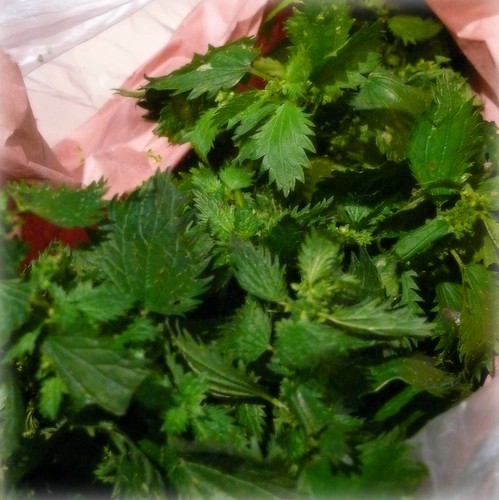
One bunch of Nettles from Glenora Heritage Vegetables, Toobanac, Victoria, blanched and drizzled with Lemon infused Olive Oil from South Australia.
Mashed Royal Blue Potatoes from Gordon Jones, Warragul, Victoria.


Photo reproduced from Gourmet Traveller


For two
people at Bistro Guillaume
- cost $90:

Whole Barossa Valley chicken, purée de pommes and sauce à la chasseur (Chicken, mashed potato with a demi glace mushroom sauce, no vegetables)


In our household, when we choose to dine out we have two streams of thought:


Moderate to cheap and cheerful food, usually from another culture, consisting of good produce cooked with traditional or regional pride.


Secondly there is the more expensive food that astounds us with its imaginative and passionate approach. Food that requires a kitchen brigade, food I would not cook at home.


So with that in mind and having studied the menu, Mr Stickyfingers and I will not be going to Bistro Guillaume. I know a number of local bloggers have already been and shared their positive experiences, but as nice an outing as it might be to sit in the chi-chi surrounds of this much vaunted venue, quite frankly Monsieur Brahimi's menu resembles the food we eat at home. Well, those dishes along with our
favourite Asian and Hungarian meals in my repertoire.


Perhaps if I were unable to acquire such good produce for myself, I might consider it. Given the marvellous concepts, innovation and exploration of new produce happening on the food scene here in Melbourne, I think that it would not be high on our list. In fact there are a number of more humble French establishments that I might choose in preference to it.


I know that although my home is small and simply furnished, the providence of the produce in our pantry is as good - and my techniques are sound. Our roast chicken was as succulent and as flavourful as you could wish for, plus we had the benefit of easily staggering to the lounge for semi-horizontal post-prandial relaxation. There was minimal prep time. Cleaning up pretty much required just throwing everything into the dishwasher.


Perhaps I am stuck up and naive but nothing could compel me to part with $90 for the same meal that I eat regularly at home.


Are the diners of Melbourne suffering from a case of
'The Emperor's New Clothes' - being hoodwinked by our fascination for the new and by the hype stirred up
following the arrival of celebrated Sydney chefs?

What do you think?


11 June 2008

Satay. A splinter in my heart


Kaj and Gerda were looking at a picture book of birds and beasts one day, and it was then-just as the clock in the church tower was striking five-that Kaj cried:
"Oh! something hurt my heart. And now I've got something in my eye."

The little girl put her arm around his neck, and he blinked his eye. No, she couldn't see anything in it.

"I think it's gone," he said. But it was not gone. It was one of those splinters of glass from the magic mirror. You remember that goblin's mirror-the one which made everything great and good that was reflected in it appear small and ugly, but which magnified all evil things until each blemish loomed large. Poor Kaj!

A fragment had pierced his heart as well, and soon it would turn into a lump of ice. The pain had stopped, but the glass was still there.

The Snow Queen, Hans Christian Andersen


There was a time in my childhood that a friend once aptly coined ‘The Cupboard Under The Stairs Years’. In this time I acquired a number of culinary skills from the families I lived with, as a way of trying to find some social connection with my foster mothers in the face of a deep sense of abandonment.

I am the child of two very bright individuals. But with the gift of great intellect sadly often comes erroneous social deficit, so the burden of having a child meant that I was often in the care of others. Shy and struggling with childhood relationships while feeling unconnected to other children, I gravitated towards the company of adults and to the kitchen.

Modern psychologists would now assess that I experienced a form of childhood attachment disorder and that food then became my link to love. I was consequently given culinary tasks to occupy my time. As I related to Ed, I recall vigorously cleaning and peeling squid and octopus, and of finding satisfaction in peeling poached ox tongues, happy to contribute by doing small undesirable tasks for others. And this is also how satay came into my life.

It was the mid nineteen seventies. I was in primary school at the time and staying with old family friends - a blended Hong Kong and Singaporean Chinese family. The couple came to Australia originally to go to university, but stayed, married, had children and now spoke with broad Aussie accents. They were more integrated into the local culture than my parents and seamlessly blended the Chinese Culture with being Aussies.

My foster parents had not only generously taken me in, but had been volunteering their time at a migrant hostel where Vietnamese refugees were being temporarily housed. Many of the refugees were either Southern Vietnamese or Ethnic Chinese so although they did not speak English, we shared Cantonese in common. I had no knowledge at the time that I too had family in Vietnam. My Foster parents selflessly helped a great many of these people to resettle in Melbourne and introduced them to the Australian Asian lifestyle.

One weekend my foster family and their friends - including my parents – hired a large tour bus to bring some people from the hostel to their beach house in Mount Martha for a day trip. All ‘The Aunties’ were bringing food, and my Singaporean Foster Mother and I made satay. I recall spending two days preparing the satay and from that point on, if she was having satay at a dinner party it became my task to prepare it.

I loved silently immersing myself in the process. Preparing marinade, cutting strips of meat, shelling and de-veining prawns and carefully threading them onto water soaked bamboo satay sticks. My foster mother always made the satay sauce as I was kept well away from the stove.

I've been refining the recipe ever since - always working by taste and by sight. Now I have Mr Stickyfingers' palate, care and attention to add to the process and to protect me from my anxieties. He is a Godsend.

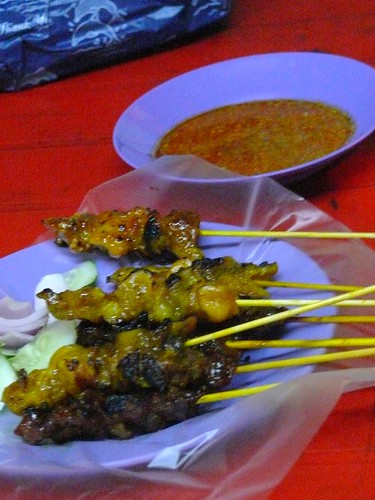
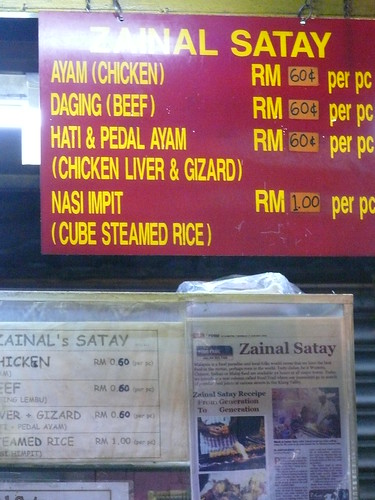
Back in Malaysia recently, Mr Stickyfingers and I consumed mountains of satay. The best in our opinion - that we tasted on this latest jaunt - was in Chinatown’s Petaling Street Market from Zainal Satay (pictured).

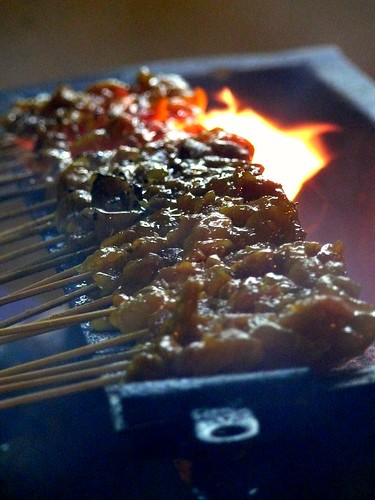
As we came through the steamy throng of vendors of pirated handbags, sports shoes, jewellery, t.shirts, DVDs and souvenirs, the distinct smell of satay over a charcoal brazier wafted our way. Then with a brilliant flash of fire in the nightscape, we spotted the Satay hawker. This man obviously had a fan club and a couple of newspaper clippings describing his satay festooned the cart from which orders were taken and the satay was dispatched.


Hunkered on low plastic stools at folding tables we watched as people bought large amounts of takeaways. Sixty eight year old Zainal Ismail bent over his long Hibachi brazier sweeping a marinade of sugar and oil over the sticks, and ignited them with roaring fire, ever so slightly blackening the edges, before turning them as he has done for 28 years. Each stick was fragrant and moist and came to the table with cucumber pieces and raw red onion, alongside a sublime peanut sauce. We ordered more, and then came back for another session a day later.

A heady combination of lemongrass and ground rhizomes flavoured the peanut sauce. It was so good I wanted to lick the plate. His recipe originates from Jakarta and he prepares 1,000 sticks of satay a night. In Penang we were told that the Chinese in Malaysia use sweet potato as their sauce base, while the Muslims like Mr Ismail use peanuts. As I recall, in Vietnam their satay sauce is a blend of Chilli oil, palm sugar and peanut powder, with intensely flavoured, pungent seasonings. I find all versions are delicious, perhaps because its flavour hearkens an umbilical connection to the shadows of my childhood.


RECIPE
Satay - chicken & pork or beef
Makes 78 Satays and a vat of sauce
Start preparations the day before serving, in order to marinade meat. The sauce will also develop more flavour over the first 24hours

4 skinless chicken thigh fillets
2 small pork loin fillets
or
350g lean beef such as chuck


3 tablespoons ground Coriander seeds
3 tablespoons ground Cumin
3 tablespoons ground Fennel seeds
1 cup bruised and julienned Lemongrass
1 cup julienned young Ginger
1 cup julienned Galangal
150g julienned Turmeric root
1 very large clove of garlic
3 shallots or an equal quantity of onion
2 small fiery chillies
3 tablespoons tamarind paste
3 tablespoons Kecap Manis
6 tablespoons fish sauce
2 cups finely ground (powdered) peanuts
300ml Canola/Peanut Oil
1 tablespoon Belanchan
2 large disks of light palm sugar
250ml coconut milk
water
100ml Chilli Oil
Juice of 2 limes
cup of coarsely ground peanuts

MARINADE
Dry roast coriander and cumin in a wok until the aromas are released. Set aside.
Pound julienned lemongrass, ginger and galangal in a mortar and pestle until a paste is formed and the fibres have been broken down in the rhizomes. You can do them separately or mix them, depending on the size of your equipment. Transfer to a blender with the fresh turmeric.
If you skip the mortar and pestle you will weaken the flavour and your marinade and sauce will be full of unpleasant fibres. To get around this you can blend the ingredients and then place them in a muslin bag and squeeze out the juice, then discard the fibres, but it still won't taste as good.
Pound garlic, chillies and shallots in the mortar and pestle until you have a paste and add to blender with the rhizomes. Add 100 ml of oil and blend into a smooth paste. Add half of the dry roasted spices and incorporate into the paste with 2 tablespoons of fish sauce, 1tbs of Kecap Manis and 1 tbs of tamarind paste. Blend until combined. Take half of the paste out to be your marinade. The rest will be your sauce base.


MEAT

Thinly slice your meat and place chicken and pork into separate plastic bags with the marinade. Massage the marinade through the meat and leave refrigerated for 24 hours.
Soak bamboo skewers for 1hour in warm water. Before serving skewer satay flatly onto sticks. Don't be tempted to make it big and chunky, satay should be grilled quickly over hot coals and brushed with a mixture of cooked oil and palm sugar. It's a mouthful of meat rather than being a Shashlic.

SAUCE
For the sauce, dry roast the ground peanut powder. Remove from pan. Open all your windows and doors to fry the pungent Belanchan in a wok with some oil over high heat – otherwise your home will stink for days to come. Add one spoon of fish sauce and the remaining dry spices, continue to fry.
Reduce the heat to medium. Add in the rest of the paste from the blender and combine.
Add the rest of the Kecap Manis with melted palm sugar and then add the roasted peanut powder. The mixture will be firm by this stage so thin with coconut milk and water at your discretion until you have the desired consistency.
On low heat, season to taste with fish sauce, lime juice and chilli oil, working quickly to stop the the flavours of the rhizomes from dissapating. Finish with coarsely ground peanuts and if you want a more pungent flavour toss in some powdered Ikan Bilis.

Serve sauce at room temperature on flat dishes for dipping the meat into, alongside cucumber, onion and Nasi Impit - rice parcels. Left over sauce can be frozen or placed in a jar, with the surface covered by a thin layer of oil and kept in the fridge.


15 March 2008

Comfort Food 2. Chocolate Mousse


"If any man has drunk a little too deeply from the cup of physical pleasure; if he has spent too much time at his desk that should have been spent asleep; if his fine spirits have become temporarily dulled; if he finds the air too damp, the minutes too slow, and the atmosphere too heavy to withstand; if he is obsessed by a fixed idea which bars him from any freedom of thought: if he is any of these poor creatures, we say, let him be given a good pint of amber-flavored chocolate....and marvels will be performed."
Jean-Anthelme Brillat-Savarin (1755-1826)


In the seventies, Fondue parties were big. My parents had two fondue sets that were purchased in Switzerland, one for the cheese - served with lashings of schnapps - and one for the chocolate. They were popular dinner party hosts.


The hair was big, the textiles bold and the music cheesy, but I was intrigued by the whole process. My emotionally delicate mother would usually end up with a passive agressive pout and would retire early with a migraine, while dad - the raconteur - entertained the guests until exhausted. I would watch TV quietly in another room and clean up after them when the guests had left.


My mother was also well known for her classic Cantonese dishes and her Fusion food which pre-dated any restaurant fads. My father was venerated as a trained Patissier who only pottered with it for fun. When the Fondue craze passed and its kitsch sets were relegated to an unreachable cupboard, he invariably kept returning to two chocolate desserts by popular demand.


One was a mountain of Profiteroles - custard filled choux pastry balls drizzled with chocolate. The other was Chocolate Mousse. Neither stretched him creatively so after a time they became my domain - along with mixing and serving the pre-dinner drinks. Having licked many bowls and spatula's in the process, I feel as though I can make them blindfolded.


So, with another hot evening to be spent with the Custard Crusaders eating dishes made from Greg & Lucy Malouf's Turquoise, I resisted the temptation to turn on the oven to bake, as I had on New Year's Eve. Looking at a stash of Lindt Milk Chocolate - which doesn't turn me on - and some Bittersweet Lindt couverture - actually my cup of tea - languishing in the cupboard, I invoked my childhood memories to make what my father called in Ching-lish, 'Jiggle-it-Mousie'.

(Cantonese speakers tend to break words down phonetically in to monsyllabic phrases and add '-ie' to the ends of English words. The first word sounds like the Cantonese word for Chocolate.)


This recipe is also similar to my family's chocolate & cognac ice cream recipe, and is an excellent way to use up any Easter Eggs approaching their use-by-date. It is also Coeliac friendly - yes my friend, Gluten Free Gourmet, you can make this too.


Chocolate Mousse
(Serves eight shameless chocoholics)

350g Chocolate - the best you have

4 eggs Separated (if you're using fresh farmers eggs which are small, add in a duck egg or 2 more hen eggs)

2.5 tbsp Grand Marnier or Cointreau

1 tbsp Caster Sugar

250mls Thickened cream


In a bain-marie or a medium sized mixing bowl suspended over a pot of simmering water, melt chocolate until viscous. Remove from heat and add egg yolks, stirring with a spatula. Add Grand Marnier. Stir in.

In another bowl whisk egg whites until soft peaks form then add sugar, whisking until the thick and glossy, but not stiff in the manner of a meringue. Fold a large spoonful of the egg whites into the chocolate until well blended, then fold in the rest until combined.

Whisk cream until thickly whipped and then fold into the chocolate mixture. Spoon evenly into chilled vessels and cover with Glad Wrap. Chill for two hours in the fridge and garnish prior to serving with grated chocolate.


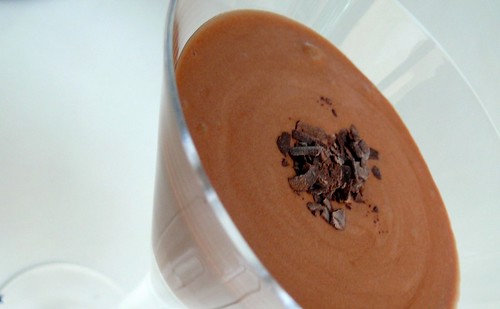
In my childhood it was doled out in ramekins and served with more whipped cream and in the eighties, cointreau drenched berries. Times change, I keep it simple now and use cone shaped bowls or martini glasses with a garnish of bitter chocolate or orange flavoured Iranian fairy Floss. If you want to go 'Molecular', add a white chocolate foam to the top and serve in Duralex glasses with a little Biscotti on the side.


07 February 2008

Comfort Food 1. Hungary


Nostalgia equals comfort.
The rosy hues of memories are often brought back by the waft of a smell and consequently everyone identifies certain dishes nostalgically as their comfort food. When eaten, these dishes nurture us and provide solace in such a unique way. Sometimes these favourites are also a guilty pleasure, which puts a number of our favourites in the ‘Break Glass in case of Emergency’ category.


Having had an eclectic upbringing my comfort foods are a mixed bag. Recently Food Writer and Blogger Pat Churchill suggested that she would like to read about mine on the blog, and some time earlier Ed Charles had suggested I write about one of my favourites - the proper way to make steamed fish in the Chinese manner.


So, this will be the first of a regular series of posts about my comfort foods. Other dishes I may write about - aside from Steamed fish - include Pho Bo, Congee, Gon Chow Ngow Hor, Csirkepaprikás, Cha Sui, Banh Xeo, Green Curry, Crab Custard, Rakott Krumpli, Liptauer, Gorgonzola Gnocchi, Yorkshire Pudding, Golden Syrup Dumplings, Kugelhopf (George - mine’s probably more like Kugler Csokoládés Maktortája), Chocolate Cognac Ice Cream.


I’m going to start off with the pancakes I made for Shrove Tuesday. It’s a Hungarian stuffed pancake dish and comes from the Hortobágy steppes, a World Heritage Listed plain, where horseman herded and grazed cattle for centuries. Historically the diet there was very heavy in meat.


The dish usually requires veal or a mix of different ground meats, but I had some venison set aside, which works well on its own but chose to add Kaiserfleisch because venison is so lean. The flavours of smoked meats are also common to many dishes from this area, so it was not inappropriate.


It is said that the Hortobágy cattlemen would carry smoked meat and salamis with them to snack on and chew, on long rides. In a small cauldron, they would flavour a stew with these and throw in some caraway and onion. This is in fact also the origin of many traditional dishes such as Gulyás, Pörkölt & Tokány (Goulash/Stew).


You’ll find this particular pancake dish served as an entrée in Hungarian restaurants, but we eat it as a main with some shredded red cabbage simply braised in apple juice with caraway seeds.


It brings the memories flooding back of my Aunty Susi and her family yelling at each other boisterously in a Robin Boyd Mid-Century Modern house furnished uncomfortably with heirloom Featherstone furniture, while I struggled to make sense of my place in the world. And finding comfort in the cooking of an odd-bod collection of extended family, consisting of unrelated, sympathetic Mittle European Holocaust survivors, I gave thanks just to be alive.


Húsos Palacsinta a Hortobágyról
Hortobagy style Venison and Paprika stuffed pancakes
Makes 3 servings

(filling & sauce)
250g Ground Venison
50g diced Kaiserfleisch
1 finely diced medium sized onion
1 smashed clove of garlic
Pinch of salt and pepper
2 teaspoons of smoked paprika
1 cup of sour cream
½ cup Tokay
3 table spoons mild paprika relish
1 table spoon cornflour

Sauté Onions with Kaiserfleisch in a little olive oil (Hungarians use lard, goose or duck fat). Add venison and garlic, brown, season then cook covered on medium heat for a few minutes.

Strain off any pan juices, if there are any, and reserve. Add smoked paprika and a tablespoon of the sour cream and simmer for another few minutes until the smell is rich and fragrant. Remove from pan and rest before placing into crêpes and rolling up.

Deglaze the pan with Tokay (or Muscat/Sherry/Port). Add pan juices. Mix the paprika relish and corn flour into the sour cream; it should turn orange. Add to pan and simmer until the sauce has thickened, then pour over the rolled, filled crêpes.


My parents got me making pancakes and crepes when I was eight years old. This is my original recipe, which I alter according to the application. Though these days I no longer need to follow the recipe. I pull it together adding the quantities based on sight, texture and demand. For the dish above I would make the mixture a little thicker than the basic quantity with some extra flour.
Because I originally took the recipe from a cookbook in the UK in the seventies, the measurements are imperial, but I have converted them for you.

Stickyfingers Crêpes

5oz/140g sifted Plain Flour
2 Eggs
1 Dessert Spoon Castor Sugar (omit for savoury dishes)
½ pint/300ml milk
Grated rind of a lemon (can omit for savoury dishes)
1 tablespoon melted butter

In a jug add eggs to flour and sugar; whisk. Gradually add milk and butter in a stream as you beat and when the mixture is smooth add the lemon rind. Rest until the batter is the consistency of thickened cream. The Batter can be thinned further with water if required.

*TIP: To make a waffle batter add 1½ tsp baking powder

Pour a little batter into a lightly greased sauté pan and rotate until the base is coated with the mix. When the edges are a little crisp and air pockets start forming under the centre, loosen the edges of the pancake and flip or toss.

Paul Bocuse once said that the first crepe always goes to the dog. This is generally because the first one is heavier and the pan needs to lose a little of the fat for a perfect result in rolling the mix around the base of the pan.


**BTW Happy Chinese New Year - Kung Hei Fat Choy!
As celebrations last 15 days, I will endeavour to give you a run down on the food and its links to Chinese New Year traditions in posts to come.