01 August 2008

Taking Stock Chinese Style


To possess the services of a good Chinese Chef in one's home is like having a prima donna in close vicinity. He includes all the talents of a connoisseur with the knowledge of a herb doctor, the sensitivity of a mother-in-law, and the benevolence of a clucking hen.

He once held the title of Dai Si Mo which means "Grand Charge of Cuisine Affairs" and through the ages his title has grown in dignity and expanded to Dai Si Fu which identifies him as the "Grand Maestro of the Culinary Arts". Being a Dai Si Fu, he must be handled with the diplomacy and gentleness learned through time and experience.

No Dai Si Fu will remain in your home unless he loves you: and lucky and envied are those blessed with his solicitous attentions over the satisfaction of the stomach and health through the delicacies of his works of art and the science of leung-hay and yeet-hay (cool and hot chi force).

DOREEN YEN HUNG FENG
The Joy of Chinese Cooking, 1952


Ah Lung was a little girl when my family purchased her. It was the tradition for poor Chinese families with no money for a dowry to sell their daughters into service for life. In return for a new life in the household of a wealthy family, they worked as servants until they were old and many who never married were cared for by their employers until they died. Ah Lung died of cancer in the care of my grandparents in the nineteen seventies.


Little girls often started in the kitchens of the great Chinese houses and moved on to other tasks such as being maids as they grew. Ah Lung had been in the service of our extended family when my father was born and was chosen to be his nanny.


Becoming the nanny of a 'number one son' would have raised her standing in the hierachy of the household retinue and was a commendation of her skill. At that time she was probably around the same age as my grandmother, who had come to Hong Kong from Vietnam to find a husband. While my grandmother revelled in her new found life as a married woman in a sophisticated and modern family of influence, in a cosmopolitan city of the nineteen thirties, Ah Lung spoilt my father rotten.


My father is a stubbornly obstreperous character at times, and like a little Emperor he took advantage of her nurturing and kind heart. While my aunts and uncle dined together at the nursery table, his majesty was allowed to sit in his red pedal car and was fed mouthfuls of his favourite dishes.


My uncle - his younger brother - also had a personal nanny and their sisters shared another. I don't know anything of the other servants, but when my father's generation had left home and my grandparents downsized to just the one home on Hong Kong Island, Ah Lung became their housekeeper and Dai Si Fu chef.


By the time I arrived in the family Ah Lung had a gold tooth, a gappy smile and was deaf. In fact Ah Lung - pronounced ah-loong - 'deaf one' was her nickname, but she was strong and wiry and as wrinkled as a steamed tofu skin roll.


Dressed in the traditional clothes of an Amah she wore a three quarter sleeved, fitted, starched white mandarin collared top, that sat wide, stiff and loose over her hips and wide black pants. Her greying hair was cut short to the neck and pulled back tightly from her face with a wiry alice band.


At three months old I was taken to Hong Kong for my Mun Yuet. This is the time when the birth of Chinese babies are celebrated and named. I believe the tradition began at the third month because infant mortality had always been very high in China, with many babies 'taken away by bad spirits' in the first months of their lives. Prior to the Mun Yuet party, babies were given pet animal names to confuse the spirits and many wore little hats with small pointed ears sewn on them to disguise the child as a small animal.


When my parents decided to stay in Hong Kong and not to return to Australia, Ah Lung and my grandmother became very much involved in my upbringing. In fact such was their influence, I didn't learn to speak English until several years later, when we moved to England. Respectfully in Cantonese, I called my carers Ma Ma and Lung Por. I loved and revered them both.


In spite of my mother arriving in Hong Kong unable to speak Cantonese, Ah Lung and Ma Ma patiently taught her a great deal about Chinese cooking and by default, me also in later years, as I watched my mother recreating their dishes in our kitchen and later, when giving Chinese cooking lessons in shopping malls and in our home.


Mum had a lot to learn, because with the exception of roasted meats and wind dried specialties, everything was made from scratch in the family kitchen with fresh food purchased in the wet markets every day.


As if by osmosis the notion of a healthy balance of elements, textures and herbs in cooking was taken in by us and because it is now second nature to me, I am often startled when these principles are not addressed by others in their Asian cooking. I earnestly try to live up to the legacy of their mastery and subconsciously even apply Confucian notions to western cookery. But memory is such a strong thing that I feel certain I fall short of their skills.


Today, in a time where households no longer have chefs and household servants, convenience is the driving force contributing to unnecessarily poor diets in the developed world, creating an obese population with all the medical complications that come along with it.


The same findings of poor nutrition and obesity resulting from a dependence on convenience foods have also begun to come out of China. In a country that has traditionally placed so much stock in the benefits of balanced eating with reference to herbal enhancement for well being - along with exercise through martial arts - western style convenience and apathy towards home cooking is emerging as a negative trend that is sadly mirroring the current malaise in the west.


While the Chinese turn their backs on centuries of tradition, in the west a few of us are looking back to restore the nurturing balance of days gone by and in one form this manifests as the Slow Food Movement.


Although there are people in the developed world who do not know a time when shopping was not done in the Supermarket - a time before packaged and processed convenience food became the norm - a number of us are taking stock of our habits and are questioning the notion of convenience, especially when it comes to the health of our families. What is the actual cost of packaged convenience in our lives? It saves us time and effort but is expensive per gram, not particularly delicious and loaded with synthetic additives that can impact negatively on the health of children. So in the long run is it really worthwhile to cut corners?


I - like many who claim that we are nuts about cooking and are agog about things gourmet - unconsciously used to reach for the convenience of a stock cube or vacuum pack of stock or veal jus. Although it is by no means one of the worst of convenience foods available, it is actually quite an insipid addition to meals.


While home made stock is the most simple and cheap of necessary items to have in the pantry, I used to put it in the 'too hard basket' and curiously turned a blind eye to the chemicals, stabilisers, flavours and colors in packaged stock that I would eschew in items such as packaged dressings and sauces. But I now realise that stock is the life blood of cooking; a fundamental.


If your dishes are to reach the dizzy heights of flavour, you have to be using a good stock. Once I turned the corner I found that this is what lifts home cooked meals above the fare cooked in some venues and I can picture Ah Lung laughing at me and calling me a silly girl, nodding knowingly with her wide gappy smile.


If you are passionate about cooking but not currently making your own stock or Bouillon - whether European or Asian - you are possibly, as the Chinese proverb says, "Riding a cow, looking for a horse". You're making do until you can afford - or can understand - better. Once you turn the corner, you just don't go back. And to be honest, I smacked myself in the forehead when I realised how cheap and easy it is to make. It is also convenient to have on hand and not difficult to store when you know how.


The Chinese Culinary Arts have recipes for a number of stocks. At their very basic, Chinese stocks are considered to be the life blood of good health, carrying the medicinal benefits of the same herbs and spices that ancient herbal medicines use as a base to eradicate toxins and to correct the balance of the life force.


The term 'Masterstock' is something that is now fashionably bandied about in the west, particularly in the Australian restaurant scene, but is not really understood in its correct form. Simply it is a basic meat based clear soup in which different meats have been poached. Then the solution is strained, boiled, added to and used over and over again.


Each time it is used to poach more meat, the flavour increases in pungency and it imparts a deep flavour to anything poached in it. In a restaurant the stock would be used every day for poaching and added to sauces. In a household this happens less often. There are two forms of traditional Masterstock. One is merely darker than the other, employing dark soy in the mix to create specifically richer dishes such as Red Braised recipes.


The use of Chinese Masterstock evolved from a technique known in Cantonese as 'Dunn'. This is steaming and double boiling. The meat involved is browned, then submerged with vegetables in a pot of stock, which itself is then placed into a shallow bath of boiling water and the lot is covered, producing steam. After some time, the ingredients are then removed and sometimes a little of the stock is thickened with cornstarch and served with the ingredients. The rest of the stock is then reserved for use on another occasion.


The older the stock - having been used multiple times - the tastier the result. For Malaysian buffs looking for the best Hai Nan Chicken Rice, you'll find that the best ones have always been poached in an old Masterstock - which you drink slightly diluted as a side dish. To round out the meal it is mixed with dark soy sauce and chilli for dipping and is used to cook the rice that is served with the chicken. Similarly it is used for Chinese Baak Jaam Gai (poached chicken), Yow Gai (Golden Oil Chicken) and See Yow Gai (Soy Sauce chicken).


Some people pass some of their stock down through the generations and a top Chinese restaurant will have a stock that predates the venue - which would have accompanied their first Dai Si Fu. My current batch is only approaching its third year, but if you taste a spoon of that and then a spoon of packaged stock, the difference is immediately evident. Masterstock is silky and rich. It has a sheen and a depth of texture as well as flavour. It makes all the difference to a sauce, a braise, a daube, a curry, a risotto or a paella and is fantastic simply served with fresh, fine egg noodles, torn lettuce and some won ton dumplings.


As with all things, the better the quality of your ingredients, the tastier the result. I choose to use free range, ethically raised local meat and locally sourced heritage vegetables because they taste significantly better and help to support other 'Aussie Battlers'. The intensity of the stock develops faster with these ingredients. I get the spices whole from my local Asian Grocer and suspend them in a muslin bag which can be bought there too. You can even buy the complete spice mix at some Asian Grocers.


My home made stock is cheap, dead easy to make and a wholesome convenience food. I keep it in sterilised glass jars with metal lids in the fridge and some of it becomes ice cubes that get tossed a couple at a time to season stir fries. At least one litre is kept frozen in reserve, to add to the next batch I make. If I poach meat in it I reserve that batch to use again too and it all goes into the pot when I make more of the basic stock.


The key to keeping your stock from going off is to keep the solution sterile. If you're not using it every day, once you have opened a jar of it you must boil the solution again before re-refridgerating, so as to rid it of micro-organisms. I just nuke mine in the microwave, replace the lid and allow it to cool and form a vacuum again before returning it to the fridge.


If you think you don't have time to make it, consider pulling it together before watching a DVD and let it simmer away while you relax. When the movie's finished, let it cool and then strain it. Heat again and bottle it. Simple stuff really.


Because I am a fuss-pot, I cook about a six litre batch over the course of a day. Usually after a saturday morning visit to the market, I start it in the pressure cooker and then remove the spice bag. Then I add the vegetables and simmer it down gradually, adding more water as it gets low, skimming along the way. Just before dinner, at the end of the process I remove the fresh herbs and vegies doing one last batch of water to simmer then switch it off and allow it to cool. After dinner I filter it twice through a Chux. But that's me. Mum does hers in a crockpot/slow cooker/electric congee maker from Hong Kong and leaves it alone.


Masterstock is not uniform in flavour, so my approach is adhoc now that I have an older potion. Depending on what is emerging as the dominant flavour over time I adjust the seasoning to taste. However if you want to start down this path, below the picture is the formal recipe that kick starts a Masterstock. Do you yourself a favour and revive a tradition.


Chinese Masterstock starter
In 3hrs it makes roughly 3 litres of stock


1.5kg Chicken carcasses (include necks and feet if you have them)
Optional - 650g pork spare ribs OR a 10cm square piece of pig or ham skin


For a vegetable version substitute the meat with:
500g bean sprouts
10 dried Shitake mushrooms


250ml Shaoxing Rice Wine
6 slices of ginger (if it's old, bruise it with the flat of a cleaver)
6 spring onions (scallions) tied in a knot, with the roots removed
2 large cloves garlic
100g rock sugar
3 tablespoon light soy sauce
4 or 5 litres of water
1 large carrot sliced in half vertically through the length
1 whole stick of celery
(Optional) a bunch of parsley stems (no leaves) tied with cooking twine


Placed in a muslin bag or a small cloth tied with string:
4 cardamon pods OR 2 large round brown cardamon
1 tspn fennel seeds
2 pieces of Cassia bark
2 star anise
1 piece of dried Mandarin peel
4 coriander roots
4 cloves
1 tsp Szechuan Peppercorns


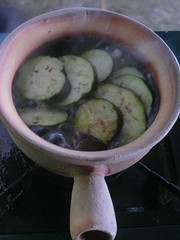
Remove any excess fat from the meat and place in a stock pot with all the other ingredients. Bring to the boil and simmer for 20minutes before removing the spices, or do the same in a pressure cooker.


Cook over low heat for 2-3hours, occasionally skimming the surface - though you can leave this until the end. Taste the stock, if it is too weak reduce it further and then add back some water. Cool.


Line a colander/strainer with a fresh piece of Chux cloth or cheesecloth and place over a bowl to strain the solution. Repeat on returning it to the pot if there's still a lot of silt like residue sinking to the bottom.


Bring to the boil again and then bottle it or freeze in ice cube trays and then transfer the frozen stock cubes to a bag so you can grab a couple as you need them. Reserve some stock for the next time.


When you run low and need to make another batch, do exactly the same and add in the reserved stock. The Chinese ethic is to waste nothing, so the bones from the discarded carcasses feed my pets and some of the meat is made into rillettes or tossed into congee made with masterstock.

28 July 2008

Untying the Apron Strings. Marketing Chefs


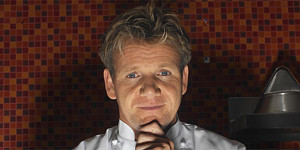
Gordon Ramsay on his eight-year-old son Jack:

“Yesterday he came running in and said, 'Dad, what's a wanker?',” said Ramsay.

“I explained to him it meant like being a bit of an idiot and he replied, 'Oh, you mean like a knob?' So I had to sit him down and found out that this was coming from the 16-year-olds on the bus who'd decided to teach Jack Ramsay a different swear word every day.”

Ramsay explained to his son that swearwords have their place but that “he wasn't to use them in front of the girls or his mother”.


The Superstar chef phenomenon has been relatively slow to hit Australia, just bubbling along on a small low key scale. Perhaps our isolation and smaller population contributed to this? But in the last few months average Aussies have fallen into the spellbinding, foul mouthed world of Gordon Ramsay which does not have me surprised, although I wonder why it has happened now?


Gordon Ramsay's Kitchen Nightmares took off this year on free to air TV, however it was not the first time it aired. Channel Seven had previously aired it and received a small audience late on Thursday nights, while now, Channel Nine pay $15-30k per episode to show it and Hells Kitchen and they have topped the ratings in their time slots. Tonight The F Word will also be seen on free to air television. All shows have aired on subscriber TV Foxtel, but have not received the cult status they now receive. Also tonight, Andrew Denton interviews a laryngitis hampered Ramsay on his show, Enough Rope.


So what gives?


Is this a flow on effect from the boom in trash magazines, splashing contemptuously puerile news on badly behaving celebrities? Has this finally washed through to Aussies because the fascination with the lives of others has gone from Royal watching, to actors, to Big Brother, has worn off and is taking route in another sphere? Is it because the general public are now most entertained by schadenfreude – where watching Ramsay’s guinea pigs being humiliated, fulfils an audience desire to feel comforted that they are superior to the next man? Or is it because in the last ten years of economic boom, Aussies have fallen spellbound in to the arms of marketers and the worship of brands?


You see, in 2006 US Writer Michael Ruhlman was already onto it. It was a trend already well established in the UK and USA . And it was this change in attitudes that moved the notion of the Head Chef and Restauranteur from the traditional perspective of Master Artist, to the individual becoming a commercial property. Ruhlman followed his fascinating books, The Making of a Chef and The Soul of a Chef, with The Reach of a Chef, a book exploring the zeitgeist of the Celebrity Chef or Superstar Chef phenomenon in the company of high profile chefs.


This showed that a new commercial tack had Branding and Marketing experts taking the more charismatic chefs out of their whites and slipping them into designer threads for the public eye - and before you knew it the Executive chef was no longer to be found in their own venues. Instead they became the ambassadors of their brand, used as a conduit to funnel more awareness into their venues in the search for commercial success beyond which chef’s had previously experienced.


Whether they garnered the respect of the Michelin Guide was another matter. In their favour, the results of this publicity showed that they were moving up into the strata of elite Sportsmen and Actors as people of notoriety AKA entertainers - the people who seem to garner the most remuneration based on their entertainment value. Like these other celebrities they now had brand spokesmen, business affairs managers, agents, publicity consultants, and legal advisers.


Next for these chefs came the articles and cookbooks, followed by the merchandise, spice ranges and the charity profile, and for some, also the Television appearances. A selection of the most photographic had their own TV series, and in the case of Jamie Oliver and Gordon Ramsay the publicity machine moved on to live appearances, Jamie’s stage show and Gordon’s multiple TV shows.


There are numerous chefs in the USA and UK who have yet to reach our free to air media radar, but I dare say that after a decent run on Foxtel they may surface here too. Whether gifted or mediocre, they are increasingly becoming wealthy beyond any chef who stays firmly in their venue’s kitchen. And the trend is for them to have restaurants dotted around the world to service the elite who, in many instances are choosing the brand over the gastronomic experience.


On reflection, the chefs that now garner the most viewership overseas from non culinary groupies are possibly the bombastic ones with the most repugnant TV personas. They are the hot headed, ego-maniacal, verbose and foul mouthed chefs that dot kitchen mythology. In the UK, the footsteps of Gordon are being followed by well known Bad Boy Marco-Pierre White and the loquacious John Burton Race, hoping to follow suit are people such as John Torode.


These Chefs, who have risen in the wake of the garrulous gastronauts such as Rick Stein, Nigella Lawson and Ainsley Harriot, are a reflection of the general public’s desire for the next voyeurgasm. Marketers have recognised the desire by many of the public to be entertained by the ugliness in human nature and an increasingly aggressive and blame oriented predisposition displayed by consumers. For this platform however, time is running out.


Although most may not recognise the gradual change of attitudes - like it or not - change is coming rapidly. It may not be the message that you want to hear, but the world does not stop turning for ostriches. The economic downturn in the developed world will change our perceptions quickly, so you will see an evolution of what happens in the media with these chefs. Recessions force the public to tighten their belts and turn inwards. While some will retain the ability to indulge in fostering the brand experience, many will be looking for an alternative. The food world may suffer a backlash of their past extravagant excesses, but artistry will continue to rise in order to inspire.


In humble and potentially humiliating times, smugness will not be considered entertaining, while practicality is set to come to the fore in a light hearted way. Even the gleaming white teeth and perfect pastel world of Bill Granger may become an anathema to the struggling public. Already Nigella Lawson has come under fire in the UK for the unrealistic portrayal of her lifestyle on her show, filmed in a house that is not her home and of the scenarios played out within that are obviously staged, while her so called friends are bunch of attractive extras invited to mill around holding plates of food stylist produced Nigella branded dishes.


The crest of the celebrity chef wave is riding on a razors edge and only the quick swimmers in that stream will continue to feather their nests. I expect that Gordon Ramsay’s marketing machine is already moving on this with the publishing of his biography citing his humble origins and the increasing marketing of his wife Tania - co-host of Market Kitchen - raised on a farm with a hobby dairy, a kitchen garden and home cured meat etc, a former pre-school teacher and author of two cookbooks aimed at meals for children and families. Jamie Oliver seems to innately predict the zeitgeist and although some of his material has raised hackles, will probably continue to produce copycats.


Although we were slow to recognise Gordon’s publicity machine, we will not be slow to change our attitudes once our purses are pinched. So whether the public will have the disposable income to buy the expensive product lines touted by celebrity chefs in times to come is also debatable.


Long range marketing plans suggest that it will be celebrity chefs who drive the push back to eating simple meals in the home as a family, as a way of justifying their new lines of more affordable merchandise. The focus is tipped to come back to teaching the public the basics of cooking since the demise of Home Economics classes in schools and the rise of the convenience meal. Affordable and healthy home meals will be driven by smaller purses and the alarming increase in food allergies in our children, and perhaps, just perhaps the desire to watch others being yelled at, will lose its fascination.


As the time of excess passes and more philantropic topics rise into the media, at the very least, perhaps Gordon Ramsay's kids will no longer be butt of practical jokes aimed at their father?


If you’re looking for the recipe for the celebrity chef business model, this one is offered by
Dilanchian Intellectual Property Lawyers:


1. Select the cookware and tools
a. Register a domain name for the celebrity chef

b. Register trade marks for the celebrity chef - as Paul McCartney's company (MPL Communications Ltd) did this year for "McCARTNEY" trade mark applications in the UK and the EU. They are in numerous classes of the registers, including class 29 for "vegetarian foods" among other things

c. Build the celebrity chef website - do a blog, or a website. Here's a shortlist for inspiration:
Stephanie Alexander
Paul Bocuse
Iron Chef French Hiroyuki Sakai
Neil Perry
Gary Rhodes
Hugh Fearnley-Whittingstall
Keith Floyd
Lloyd Grossman
Nigella Lawson

d. Build credibility - start a restaurant or extend into food after establishing celebritity status in other areas (eg sport or film). The big break may come on My Restaurant Rules(an Australian TV program which may run to a third series), but to be a celebrity chef you don't have to have a restaurant. Donna Hay does not have one, nor does Curtis Stone.

e. Negotiate licensing arrangements - write a book or get someone to ghost write it for you, find a television producer and brainstorm ideas, distribute DVDs of the TV program.

f. Grow publicity - participate in food festivals, private parties, trade shows, radio interviews, book signing events, product endorsements, television appearances, and corporate events.

g. Clean up - merchandise like a rock star, cookware is obvious but there are few limits.


2. Work with the key ingredient - the personality

Donna Hay stands for simplicity, she is the honest local; Kylie Kwong is the fifth generation Australian with a Chinese soul; Gordon Ramsay is culinary perfection with a foul mouth and he plays this up all the way to the bank; Jamie Oliver is the energetic and keep-it-simple 'Naked Chef' and the no pretension 'Pukka Tukka' guy; and Nigella Lawson is intimate but homely.


3. Pour in the oil - sizzle the personality

Put up your hand if you have a Donna Hay book, have read about Neil Perry's association with the business class and first class menus for Qantas, have watched Jamie Oliver on TV in Jamie's Kitchen, or coveted Nigella Lawson's curvaceous cookware. Keep your hand up if you believe there is a strong connection between the names and identify of celebrity chefs and their food. Yes, food is a very personal product. In food franchising surnames or a personality are common in the identity of the brand, eg McDonald's and Colonel Sanders for KFC. The same pattern of name or identity association appears in the names of the books, television shows and restaurants of the famous chefs. Here's a short list:

Books: bills Sydney Food (Author: Bill Granger), Donna Hay Christmas, Kylie Kwong Heart and Soul (pictured right is Kylie at a book signing event), Nigella Bites (by 2002 Nigella Lawson had sold 1.5 million books), Jamie's Dinners (Author: Jamie Oliver), and Gordon Ramsay's Kitchen Heaven.

Television: bills food (Bill Granger, The Lifestyle Channel), Kylie Kwong Simply Magic (The Lifestyle Channel), Gordon Ramsay's Sunday Lunch, Jamie's Kitchen Australia, Nigella Bites Christmas. Jamie's Kitchen Australia, showing on Network Ten is enjoying success: 1.34 million people tuned into the premiere, with repeat ratings over the one million mark.

Restaurants: bills, bills 2, Billy Kwong (all associated with Bill Granger); and Restaurant Gordon Ramsay.


4. Add and stir - merchandise and more promotions

Bill Granger (proprietor of bills) has commercial interests in Poliform Kitchens. Jamie Oliver's commercial interests include Tefal Cookware, Gadget Candy and Jamie Oliver Cookware. 'Gordon Ramsay by Royal Doulton' brings you a tableware and cookware collection. Neil Perry brings you a collection of sauces as pictured above.

Jamie Oliver is a household name in the US, something assisted by regular appearances on Oprah. He is prominent in celebrity endorsements, eg in Australia for Yalumba wines. In the UK his endorsements are in favour of Sainsbury's (an endorsement estimated to be worth £1m) and an Italian food range of artichokes, anchovies, capers, pesto, pasta sauces and infused olive oils.

Magazine writing is a very common commercial interest of celebrity chefs, eg Nigella Lawson and Bill Granger both write for the ABC's Delicious magazine.


5. Clean up


The final step of the recipe for making a high net worth celebrity chef is to clean up. Here are profiles of three UK chefs that have cleaned up.


· Jamie Oliver, 34, is estimated by The Independent to be worth £58m in August 2006. He has been involved in more than seven series of TV programs and eight books. Oliver invented and sells the Flavour Shaker, a modern version of the pestle and mortar, which crushes herbs and spices.

·
Gordon Ramsey, 42, is estimated by The Independent to be worth £67m. It notes: 'He now has nine restaurants in London, with four chef patrons (Angela Hartnett, Marcus Wareing, Bjorn van der Horst and Mark Sergeant) and two abroad, in Japan and Dubai - though they are operated by franchisees. A major expansion is planned in the US, with openings in New York and Florida in October.' In the UK Ramsey has had five TV programs and has published 13 books. The Independent also reports that: 'The last available accounts [of Gordon Ramsey Holdings] for the year to August 2004 show turnover of £30m - steeply up from £21m the previous year. Profit after tax was £2.7m, against a £1m loss last time. Directors' fees were £512,000.

·
Rick Stein, 61, is estimated by The Independent to be worth £36m. Stein has built a seafood empire in the Cornish port of Padstow. It incorporates the £115-a-head Seafood Restaurant, a 33-bed hotel, cookery school, St Petroc's Bistro, Rick Stein's Café, Stein's Fish and Chips shop and a patisserie - all in Padstow. Stein is credited with 11 books and 12 TV series. He has interests in Australia, where his company The Seafood Restaurant (Padstow) has a 1 per cent holding in Tower Lodge winery and resort and a cake company, Palm Beach Cupcakes, run by his partner, the publicist Sarah Burns, in New South Wales. The Independent reports that 'Money from the Padstow empire and media work is funnelled through The Seafood Restaurant (Padstow), which, according to the latest accounts, employs 293 people. ... In the year to April 2005, gross profit rose by 10 per cent, from £2.5m to £2.8m. Dividends and directors' fees totalling £1.5m were paid to the Steins.'


(Addendum) This post was written ahead of time
and forward posted.

Since then I have read a post on The New York Times Blog where Laurent Vernhes recalls the Superstar Chef phenomenon in France and paraphrases Jean-Georges Vongerichten on how, as a Chef away from the stoves, he maintains the quality of his product in multiple venues.

Interestingly
Vongerichten is said to have remarked that at
his three star venue he has 60 staff to service 60 seats. As you can't make money with that ratio, you need to then open multiple venues in differing categories in order to make a profit.


In marketing terms that three star venue is then considered
to be a loss leader and is offset by venues where the profit margin is high. Obviously a sound business model and generous investment partners are required to establish this kind of Superstar Chef enterprise.


24 July 2008

Bloggers Banquet 3


Open Invitation:
Meatless Blog Meet

Date: Saturday 26th July
Time: 12.30

Lentil as Anythings @ The
Abbotsford Convent
and afterwards at
Handsome Steve’s House of Refreshment
in the same complex


Google Map


Organised this time by blogger 'Another Outspoken Female' at Confessions of a Food Nazi, is this week's meet up of Melbourne Food Bloggers, which goes vegetarian and marries with The Slow Food Movement's Farmers Market.


Open to all local bloggers and partners, these gatherings are a great way for those with blogs and their regular readers to see each other in person and cements friendships within the Melbourne online food community. You may also become aware of blogs you have yet to visit.


We started with our first outing last November organised by Ed of Tomato with a meeting of minds at the St.Kilda Veg Out Garden with a wood fired cooking frenzy utilising their oven. It then moved to the luscious Purple Goddess and Furry's wood oven at Chez Fur de Mer in Dromana earlier this year.


This time the meeting's on neutral territory for both
Bloggers North and South of the Yarra, with no cooking required at Lentil as Anything, located at The Abbotsford Convent. If you go early, you can also shop at the monthly Farmers Market and be sure to also check out the produce around the corner in the courtyard. Shoppers should BYO bags of course, as the market eschews the use of plastic bags.


Omnivores also have the option of an egg and bacon sarnie at the market with proceeds going to the local Steiner School. Pastry lovers can check out The Convent Bakery and its old wood ovens that used to service the nunnery. The buildings and grounds of the convent on the Yarra are worth a side trip to stroll around and if you're bringing kids, take some extra time to walk around The Collingwood Children's Farm next door.


Naturally everyone who has attended a BB has begun with the jitters, but within a short space of time, things fall into place, as there is much in common to talk about. So far, at least a dozen people have committed to attending and with it looking like a long afternoon, the option is there to bowl up later in the day for a drink and a chat up at Handsome Steve's House of Refreshment (just look for his brollies).
If you're interested and can spare the time, I'm sure you'll enjoy the bonhomie that a friendly gathering of food bloggers can muster.


21 July 2008

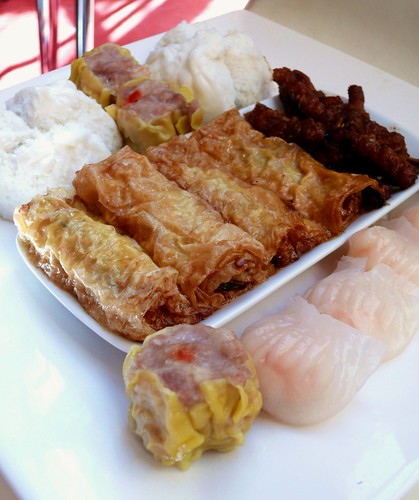
Dim Sum touched my heart


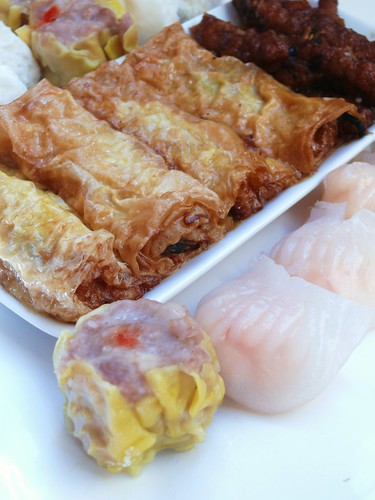
The literal translation of Dim Sum, the food served at Yum
Cha, is 'touch the heart' which can be taken to mean your heart's delight.

It is said that the meal Yum
Cha (meaning to drink tea) began as a range of snacks on offer in the tea houses that dotted The Silk Road from 300BC, connecting China to the trade routes of Europe and Africa via Asia Minor. Today there are in the vicinity of two thousand varieties of dim sum with a repertoire of sixty different dishes being served in the larger Cantonese Yum Cha restaurants.

Some venues bring the dim sum to the table for your selection on trolleys, while more traditional and smaller places bring them by tray, suspended by a strap around the neck of a waitress. When a dish is selected by a table, it is marked off on a sheet which is tallied at the end of the meal, with each priced according to their ingredients and skill level. Increasingly the trays are disappearing in favour of the venue offering a you a carte where your selection is marked and then the order is placed with the kitchen.

S
erved from the small hours of the morning until the early afternoon, diners will select at least one steamed, one fried and one braised dish, plus a blanched vegetable dish for a properly balanced meal and sometimes a plate of sliced roast meat is also taken. Depending on the number of diners at the table, often the repast will be finished with a shared plate of noodles or filled out with a bowl of congee. To aid the digestion tea is always drunk with Dim Sum and tiny sweet dishes are offered to finish the meal.


Yum Cha Nostalgia


Memory one:
I sit in a high chair in a bustling restaurant on The Peak in Hong Kong. My Chinese Grandmother
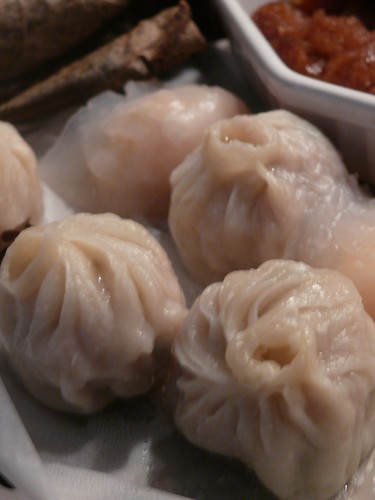
is dressed in a modern Cheung Sam. She removes the translucent white rice pastry skin from a steamed prawn dumpling that she has cooled and leaning in, hands me it on a toothpick, making it simple for me to savour the filling.


Memory two:
1970. I am crunching my way through a deep fried wonton with sweet sauce in a Chinese restaurant when suddenly
deafened by firecrackers. My nose wrinkles as the gunpowder drifts up from the street. We are eating Yum Cha upstairs. A waiter moves through the room with a broomstick, attached to which are a Chinese cabbage, a roast duck and some Lai See (lucky red money packets), which he suspends over the street from a nearby window.

Next I am being held at the hips by a family friend so that I can pivot out of another window to watch the Lunar New Year festivities below. An ornate Chinese Dragon climbs up to retrieve the spoils from the broomstick and two lions dance in the street amongst more exploding fire crackers. Drummers & cymbals beat and clash in a steady rhythm that I carry in my head for the next two days and when stirred, I can still hear them today.

We were in Gerard Street, London. The Dim Sum languished on a large round table in the midst of the excitement at Lee Ho Fook, the restaurant immortalised by Warren Zevon in his song 'Werewolves of London'.


Memory three:
My father dresses me in one of my prettiest and most expensive outfits purchased in a London Boutique. I am seven and we are in Hong Kong, going to lunch with his father and my grandfather's cousins.

The cab pulls up at the restaurant door. We are at Luk Yu, at the time Hong Kong's oldest Tea House. The senior staff wear long traditional robes and the tables and stools are carved antiques. There is fine porcelain on the table and in between us are spittoons plus other accoutrements of times gone by. One gentleman has even brought his caged song bird along and it sits by him at the table.

My Grandfather seemed to be as much a part of the furniture here. Like an Oriental Gentleman's Club the clients all seemed to know one another. Smiling benevolantly like Sau Sing Kung, the diety of longevity, he was in his element.

There was no need to order food here. As a regular at the venue for over thirty years, they knew what he liked and unobtrusively brought the dim sum to the table in a steady stream.
Too enthralled to take much notice of what we ate, I sat mesmerised and observed quietly while the men talked.


Memory four:
Sundays at the Hong Kong Jockey Club in Happy Valley. Our family had a standing reservation for Yum Cha in one of the large Cantonese venues overlooking the race course. Over the clatter of chopsticks and enthusiastic conversations we would hook up around an enormous round table, grandparents, aunts, uncles and cousins.

Each week the order was the same. Towers of bamboo steamers would crowd the Lazy Susan in the middle of the table that included Grandfather's favourites like braised tripe, mango pudding and Mah Tai Goh, a steamed sponge cake, and my childhood favourite of fried wonton with sweet and sour sauce.

There would be three teapots on the table, one with Pu Erh (Bo Lay) for the older people, one with rose petal scented Jasmine tea for the younger generation and a pot of hot water to dilute either tea when it became heavily steeped. It was my task to pour tea for my elders. I learnt to hold a pot in each hand and pour steadily.

By the end of the meal the starched table cloth was covered in sauce stains, teapot drips and the bony detritus left from discarded chicken feet and spare rib chomping. The world's problem's had been solved, jokes had been cracked and our bellies were full enough to have us seeking out a place to nap. The crackle and clatter of the Mah Jong tables drifted over from another room and some of the older generation moved off to play .


Memory five:
It's four in the morning in a street just above Lang Kwai Fong, the nightclub district of Hong Kong Island. Three people dressed as though from the Rocky Horror show, a French hooker with a Freddy Mercury moustache in a black PVC trench coat and thigh length boots sits alongside a nun and three men in flamenco dresses with Timberland boots.

We sit on low stools eating dim sum including chicken feet, dragon's balls and Tofu skin rolls. One friend skewers a silky dumpling with a chopstick and feeds it to me. My feet hurt, I am a Yoko Ono clone in hot pants with soaring platform soled boots. The elderly people sitting around us behave as though we are invisible.

We had been up all night celebrating Halloween. All the expats and American born Chinese donned fancy dress to attend the Halloween parties at the city's nightclubs. My flatmate ran a popular club and restaurant, so naturally I was obliged to join the fun there. Navigating the steep cobblestoned hill that made up the nightclub district was hard. Newscasters were filming the streets lined six deep with local Chinese watching the crazy foreigners arrive in fancy dress.

As costumed people walked through the crowd they were pummelled by gentle blows. The locals hit the Gwei Lo (Ghost people/Foreign Devils) to ward off any bad spirits that may accompany them in their hideous costumes. My arms felt black and blue by the time I got in the door but my friend, 'The French Hooker', greeted me with a Flaming Lamborghini cocktail and from then until we sat down to Yum Cha, my night was a blur.


Memory six:
It was five thirty in morning when the phone rang. Grandfather said brightly in Cantonese "I'm downstairs, it's time for breakfast". I had arrived in Hong Kong a matter of hours earlier. With a resigned sigh, I rolled out of the hotel bed and quickly pulled on some clothes, brushed my teeth and joined my grandfather. He had been muttering and pacing back and forth across the lobby in anticipation, much to the amusement of the staff.

Aged in his eighties and dressed immaculately as always in a three piece suit and tie, he looked at his elegant Rolex and strode out to a cab on the kerb. He took me to a humble Yum Cha
venue filled with other elderly men, a place where in his youth he would never have dared venture.

The other customers were cut from a different cloth, had missing teeth, bulging hairy moles and craggy faces. Their clothes were cheap, synthetic and casual. My grandfather's bespoke attire was an anomaly here and I - a jet-lagged Eurasian woman with a spiky haircut - was a curiosity. "My number one grand-daughter!" he announced proudly in Cantonese whenever anyone stared at me at length and he would squeeze my arm with a grip like a monkey wrench.


Here the steamers containing the dumplings were metal, the bowls melamine, the lighting burned holes in your retinas, the tables were unadorned Laminex and the waitresses hawking the dumplings were loud, old and coarse. The din was deafening.

Men argued about the racing form, roared riotously and cursed one another. They fought loudly over the bill and spat poultry bones on the floor. But they welcomed my grandfather like a long lost friend, and I, sitting in this strange place, wondered at how he had come know to these people in the course of his pampered life. He waived my queries off with a shrug. Just another facet of his eternal mystique it seemed.

These days it is I who look at the face of his Rolex in anticipation of adventures to come.


Memory Seven:
Jalan Alor, Kuala Lumpur, Malaysia. My infected foot throbs with pain, my face is blotchy with heat and humidity but thoughts of myself dissolve as I discover the crispiest roasted belly pork I have ever eaten whilst sitting on the pavement of an inner city street waving lurid green chopsticks over orange plastic plates.

The delicious dumplings of dim sum on the table pale into insignificance as I crunch my way through the fatty, meaty, fatty, meaty, crispy pork accompanied by Hoi Sin sauce and fresh chilli. I share a dumpling with a stray cat and chat in Cantonese to the Chef. My holiday was ending.

Twenty four hours later I would be pulling on an overcoat, at home in Melbourne again.


Memory Eight:
As the lazy susan of dim sum spins like the Wheel Of Fortune, Mr Stickyfingers is sucking the flesh off a braised chicken foot at the Hong Kong Police Club and discussing how well he has done punting on the Hong Kong Cup. My extended family look on with approval and have obviously taken him in as one of them.

It is the second day of my grandmother's funeral. My beloved has sat through rituals in a language he does not speak and helped to fold sacks and sacks full of paper gold ingots to incinerate. They represent the wealth that my grandmother
has enjoyed during her time with the living and once burnt, are taken into the afterlife along with paper clothes and shoes, credit card and passport and a beautiful paper home furnished with all the luxuries in life with servants, set in a spectacular garden.


The family astrologer had told us that Grandmother had attained enlightenment by the time of her death and that her journey was now over. She would not, unlike my grandfather, be re-incarnated. Her funeral was a Tao Buddhist celebration of her life, heavy with ancient rituals and symbolism.


Amazingly just days before she died,
Grandmother accurately foresaw that there would be a mix up with her body at the morgue, but said that it would all eventually be sorted out. That she did this didn't surprise me in the least. After all, this was a woman who had chosen to wake herself out of a coma, years before.


Before she left, she reassured us that she was looking forward to moving on to a spectacular place where the garden of her new home was filled with beautiful exotic flowers. I think of her now, strolling amongst the blooms in her eternal paradise, free of the frustrations of day to day life on earth.


I love the conviviality
of Yum
Cha. I love Dim Sum - and I love that I now can enjoy it at home. You see it is almost taboo in Chinese culture to make Yum Cha yourself.


Dim Sum Masters are revered and as an Asian you do not enter their territory by attempting to make your own - God forbid! Good dim sum takes time. Years of apprenticeship are involved to study making the dishes with recipes as old as ancient Chinese history.


Special consideration must be made as to the balance of proper ingredients, textures, flavours as well as auspicious symbolism in naming and in the balance of the components. As in all Chinese food, the Confucian principles of harmony are addressed in their production.


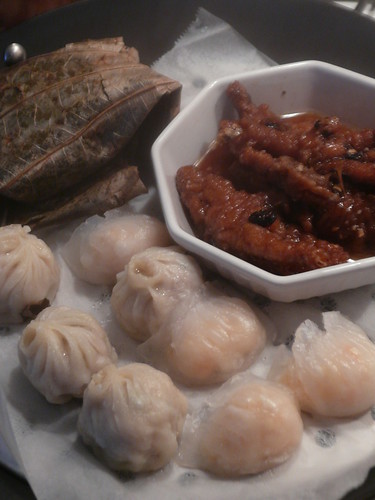
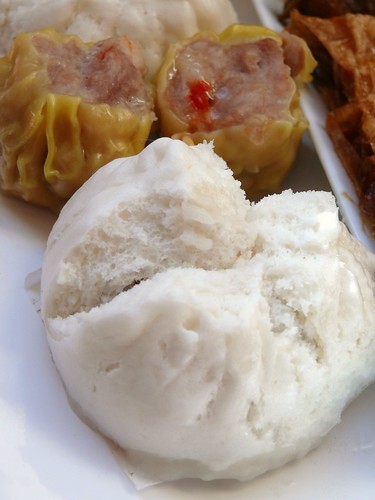
So what am I eating at home? Takeaway. The Linx Chinese food stall and cafe at South Melbourne Market is now selling frozen dim sum. The proper kind, not the aproximated yuppie version on offer elsewhere in the market. At Linx, it is the real deal. I can get all my favourite dumplings, buns and braises and the fried items like Gee Ma Ha (Prawn toast), Ham Sui Gok (stuffed deep fried glutinous pastry dumplings), Wu Gok (Panko crumbed mushrom and pork filled taro dumplings) or Chun Goon (Spring Rolls), I take away hot. Once defrosted, the steamed items only need a ten minute blast in the wok to heat.


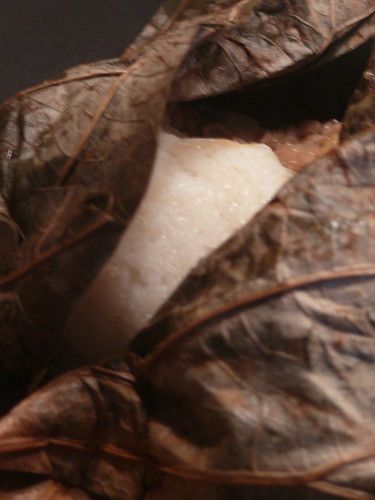
I don't use the cliched bamboo steamer. Mine died years ago. From an Asian supplier I have a metal disk with large holes cut out of it to suspend within my wok. I use it for steaming whole fish etc too. I lay some baking paper under the softest dumplings to keep them from losing their pastry bottoms to the metal plate and the braises go into shallow dishes. The Lor Mai Gai (lotus wrapped stuffed glutinous rice) sits to one side and then I pop on the wok lid. Simple, quick and the result is deeply satisfying.


Lifting the lid to examine the glossy morsels in my wok, water drips down on my dumplings. As I inhale their aroma, hundreds of memories wash over me with the unfurling of the steam. Dim Sum is deep in my heart.


19 July 2008

Chanterelles? I nearly Blewitt


‘Are you content now?’ said the Caterpillar.

‘Well, I should like to be a little larger, sir, if you wouldn’t mind,’ said Alice: ‘three inches is such a wretched height to be.’

‘It is a very good height indeed!’ said the Caterpillar angrily, rearing itself upright as it spoke (it was exactly three inches high).

‘But I’m not used to it!’ pleaded poor Alice in a piteous tone. And she thought of herself, ‘I wish the creatures wouldn’t be so easily offended!’

‘You’ll get used to it in time,’ said the Caterpillar; and it put the hookah into its mouth and began smoking again.

This time Alice waited patiently until it chose to speak again. In a minute or two the Caterpillar took the hookah out of its mouth and yawned once or twice, and shook itself. Then it got down off the mushroom, and crawled away in the grass, merely remarking as it went, ‘One side will make you grow taller, and the other side will make you grow shorter.’

‘One side of what? The other side of what?’ thought Alice to herself.

‘Of the mushroom,’ said the Caterpillar, just as if she had asked it aloud; and in another moment it was out of sight.

LEWIS CARROL Alice in Wonderland


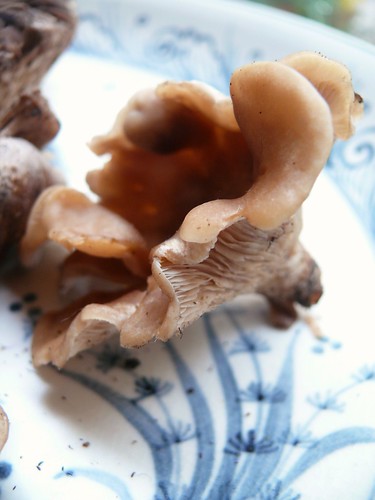
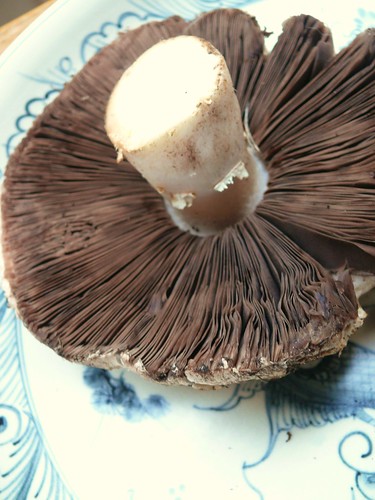
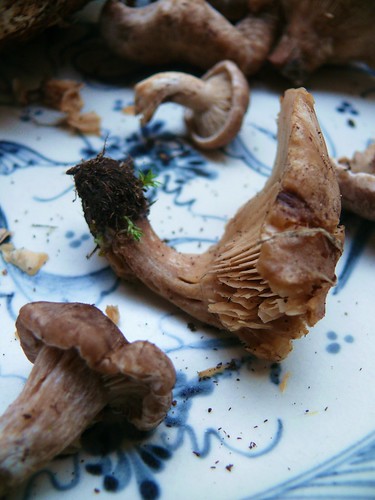
From Glenora Heritage Vegetables, Chanterelle's, Blewitt's and Cremini mushrooms


For more mushroom infatuation, visit Claire at
Melbourne Gastronome
and drool over her family's
mushroom ragu on wet polenta
.


17 July 2008

Chat & Chew - Melbourne Writers Festival


Friday the 18th of July
sees the launch of the Melbourne Writer's Festival Program with a free supplement in The Age newspaper. For those who prefer not to buy the paper the full program
is online here.


I think the Melbourne Writers Festival has been fairly low key outside of the Arts Community but it can actually be quite rewarding to attend, especially for non professionals.

On offer is a range of activities from Author lectures to literary walks and writing workshops, interactive events and
entertainment at the festival club. If you have an interest in books or in any form of writing you may well find something that will stimulate and it's all here in the city. Bookings can be made online or at the Festival box office in Federation Square.

For those with a mild obsession with things foodie, there are a few offerings of that nature, and if you are interested in enjoying some food and wine along with the banter of authors, some of these events may appeal:


Food and Wine
There being no finer marriage than food and literature, the festival offers some delectable events.


No Country for Old PMs – An Evening with Max Gillies
Grossi Florentino Restaurant
Event 2596 Monday, August 25 at 7:00PM
Event 2897 Thursday, August 28 at 7:00PM

Australia’s foremost political satirist Max Gillies in a wicked evening of reminiscence of the statesmen, the roosters, and the feather dusters he has portrayed. In a tribute to the writers Don Watson and Guy Rundle who have provided much of his material, Max brings Menzies, Fraser, Whitlam, Hawke, Keating and Howard back to life from their political graveyards in a hilarious dinner show.


Max revisits some of his razor-sharp scripts and totally unmasked, injects a fresh perspective to create a performance that cuts to the funny bone
of the body politic. No Country for Old PMs is a must-see for those in need of a laugh!

More than an evening with Max Gillies you will also dine at Grossi Florentino, a Melbourne icon thatinspires, exhilarates and seduces with a 3 course
set menu, 3 glasses of wine and coffee. Tickets: $185pp


Bottega Restaurant
22 & 23, 29 & 30 August 2008, 5.15pm - 10.30pm
Events 2292 : 2393 : 2992 : 3093

Remember the pleasure of being read to as a child? The magic that was created? Over 4 evenings, some of Australia’s finest actors -
Jane Clifton, Paul English, Reg Evans, Frank Gallacher, Julie Nihill, Suzanne Shubart and David Tredinnick will give us dramatic readings from popular Australian and international literature followed by a sublime three-course meal at Bottega Restaurant.

Bottega Restaurant, 74 Bourke Street, Melbourne City
Cost: $130pp, including wine


Modern Greek at The Press Club

Monday 25 August, 7.15pm for a 7.30pm dinner
Event 2595

George Calombaris, Chef of the Year, will speak to each course and the recipes he has chosen from his first book, The Press Club: Modern Greek Cookery. The Press Club was named the Best New Restaurant and George was named the Chef of the Year in the 2008 Age Good Food Guide Awards.

To follow will be fine cheeses selected by
Will Studd, as he talks on his latest book Cheese Slices– a comprehensive, richly illustrated guide to cheese which offers a unique glimpse into the skills and traditions behind the world’s best-known varieties.

Matching wines chosen by leading wine writer
Max Allen will offset each course. 4 course set-menu including wines.


The Press Club, 72 Flinders St, Melbourne
Cost: $155 per person including wine. No on-the-door bookings.
Bookings: 03 9677 9677

Dietary Requirements: we cater for all dietary requirements upon request. We will confirm this with guests when they make their reservation.


MoVida Bar de Tapas y Vino

Tuesday 26 August 2008, 12.00pm
Event
2692

With his award-winning cookbook based on the menu at MoVida recently released, MoVida: Spanish Culinary Adventures,
Frank Camorra shares his passion for Spanish food and its history over a set-menu lunch.

MoVida - Bar de Tapas y Vino, 1 Hosier Lane, Melbourne City
Cost: $45.00pp, includes two glasses of wine


Fragrant Rice at Seamstress

Wedneday 6 August 2008, 12.00pm
Event 2693

Visiting chef and author Janet de Neefe gives an overview of Balinese food and takes you through the menu, plate by plate, explaining the provenance of each dish. A set-price menu based on Janet’s acclaimed Fragrant Rice. Seamstress is Melbourne’s hot newest Asian restaurant which “melds the DIY sensibility of a laneway bar with serious culinary intent.” The Age

Seamstress, 113 Lonsdale St, Melbourne
Cost: $70.00pp, does not include wine


An afternoon of Big Reds

Thursday 28 August 2008, 4.00pm - 5.00pm
Event 2891

Join award-winning wine writer Campbell Mattinson for an afternoon of red wine at Beer Deluxe, Federation Square. Campbell, the author of The Big Red Wine Book, will offer a taste of his expert wine knowledge along with some of Australia’s finest red wines.

Beer Deluxe, Federation Square
Cost: $20/$18 You must be 18+


No food involved here outside of the theme, but it should be a pleasant and informative stroll:

A taste of Melbourne a literary walk

24 & 25 August, 2.00pm - 4.00pm

Work up an appetite on this walking tour of Melbourne’s culinary history. Join Charmaine O’Brien as she retells anecdotes and brings characters to life from the city’s fragrant and mouth-watering past. Beginning with a virtual taste of the pre-European pantry at Birrarung Marr, each era of the city’s development and its contribution to the way we eat now will be explored while you traverse Melbourne’s famous grid.

Along the way you will encounter the spirit and legacy of entrepreneurs, statesmen, confectioners, restaurateurs, chefs, cooks, politicians, butchers, bakers, bohemians, fishmongers, journalists, immigrants and everyday folk. And after all the talk of food and drink, real refreshment – accompanied by a little more story telling – awaits you at the end of our journey at Von House in Crossley Lane.


Venue: Walk, beginning at Birrarung Marr and ending at Von House, Crossley Lane, Melbourne
Cost: $40.00pp


Speed Book Club Dating

Thursday 28 August 2008, 6.00pm - 8.00pm
Event 2892 at Beer de Luxe

Don’t choke on your coffee; the festival isn’t going into the dating business. But, what we do want to match up are more book club members. We know that there are a lot of people in Melbourne who want to join a book club but don’t know where to start. We are waving a flag and saying “Start here at the festival”.

Come along on Thursday evening, register, and fill out your preferences for when and where you want to meet. And then we’ll introduce you, in a structured way, to a wide-range of other people also wanting to join a book club. At the end of the evening, return your list of list of those with whom you wouldn’t mind talking books and we feed all the data into the MWF computer and hope it doesn’t say ‘no’. The festival match-makes all the new clubs into being and oversees the first meeting to make sure everything is hunky dory.

It couldn’t be easier.


Beer Deluxe, outside in the beer garden, Federation Square
Cost: $10.00pp, includes a drink voucher at the door, with nibbles supplied to start you off!


In the Professional Development section one of my favourite cook book authors Lucy Malouf hosts a session:

Taste, aroma and mouth-feel
Sunday 31 August 2008, 10.00 am - 1.00 pm

Taste and smell are elusive sensations and hard to get into words.
Lucy Malouf
and Charmaine O’Brien will help you evoke past and place through reclaiming your memories of food.


Immigration Museum
Cost: $55 full, $50 concession